
- All
- Product Name
- Product Keyword
- Product Model
- Product Summary
- Product Description
- Multi Field Search


Views: 0 Author: Site Editor Publish Time: 2026-06-26 Origin: Site


The dental chair serves as the central operational hub of any practice. It also represents the largest physical investment for a new or upgrading facility. Finding the right balance of features is critical for daily success. Primary clinics need high reliability and efficient patient throughput. They rarely benefit from overpaying for highly specialized features designed for complex maxillofacial surgeries. Instead, a smarter approach focuses on practicality and daily function. You must evaluate space constraints, ergonomic longevity, and verifiable supplier support to make a wise choice. In this guide, we will explore how to define your clinic's actual needs. We will also examine core evaluation dimensions like patient comfort and rigorous infection control. Finally, you will learn how to navigate various delivery systems, budget effectively, and vet international suppliers with confidence.
Function Over Flash: A primary clinic needs reliable hydraulics/electromechanics and seamless infection control, not hyper-specialized accessories.
Modular Flexibility: Configurations like a basic dental chair with trolley offer space-saving benefits for smaller clinic footprints.
TCO is King: Upfront pricing of affordable dental unit equipment must be weighed against 5-year maintenance costs and parts availability.
Supplier Diligence: Sourcing globally requires strict verification of ISO/CE/FDA compliance and a transparent after-sales Service Level Agreement (SLA).
You must establish clear operational priorities before looking at specific equipment models. A primary care environment demands equipment capable of sustaining continuous daily use. It also requires an efficient layout to handle high patient volumes.
Heavy daily usage requires durable motor systems. You generally have two choices: electromechanical or hydraulic drives. Electromechanical systems utilize electric motors and gearboxes. They run quietly and offer precise positioning. Hydraulic systems use pressurized fluid to move the seat. They excel at heavy lifting and provide incredibly smooth transitions. Primary clinics experiencing high patient turnover often prioritize robust hydraulic systems for their longevity. However, modern electromechanical motors provide an equally reliable alternative for general use.
An oversized seat can disrupt clinic workflow. You must measure operatory dimensions carefully. Ensure the seat’s maximum recline does not block assistant access. Rotation should not interfere with cabinetry pathways.
Measure the operational circle: Ensure at least 30 inches of clearance around the headrest during full recline.
Track the assistant's path: Assistants need unobstructed movement between the sterilization area and the delivery unit.
Account for entry and exit: Patients need ample room to approach the seat without tripping over rheostat cables or plumbing boxes.
More than 80 percent of primary clinic work involves prophylaxis, straightforward restorations, and basic extractions. These procedures require standard supine or semi-supine positioning. You can safely skip costly niche modifications designed for complex surgeries. Focus your investment on sturdy core mechanics rather than high-end surgical add-ons. This approach keeps capital expenses reasonable without sacrificing daily functionality.
Evaluating clinical equipment requires a focus on human factors. The well-being of both the operator and the patient dictates the long-term viability of your practice.
Occupational injury rates run exceptionally high in dentistry. Prolonged leaning causes severe spinal strain. A well-designed seat mitigates these risks. Look for ultra-thin backrests. A thin profile allows you to slide your knees safely under the patient. This positioning helps you maintain a neutral spine posture. Furthermore, a double-articulating headrest is non-negotiable. It allows you to angle the patient's oral cavity precisely. You can achieve direct visibility of the upper arch without bending your neck awkwardly.
Patients spend significant time in your operatory. Their physical comfort directly influences their perception of your care. You must demand minimum weight capacity standards. Aim for a capacity of at least 300 pounds to accommodate diverse demographics safely. Actuation must remain smooth. Jarring movements or loud motor noises often trigger patient anxiety. Additionally, accessible entry and exit armrests matter. Pivoting armrests help elderly or mobility-impaired patients transition into the seat confidently.
Cross-contamination risks require rigorous design evaluations. Complex upholstery stitching traps pathogens and debris. You should always select seamless upholstery for primary care settings. It allows staff to wipe surfaces down rapidly between appointments. Look for easily detachable components. Spittoons, syringe handles, and scaler tips must detach easily for daily autoclaving. Membrane control pads offer another vital layer of safety. Traditional physical buttons harbor bacteria in their crevices. Smooth membrane panels wipe clean instantly.
Common Mistake: Avoid purchasing deep-bucket style seats. While they feel luxurious initially, they restrict patients from shifting their hips. This restriction forces the dentist to lean further over the patient.
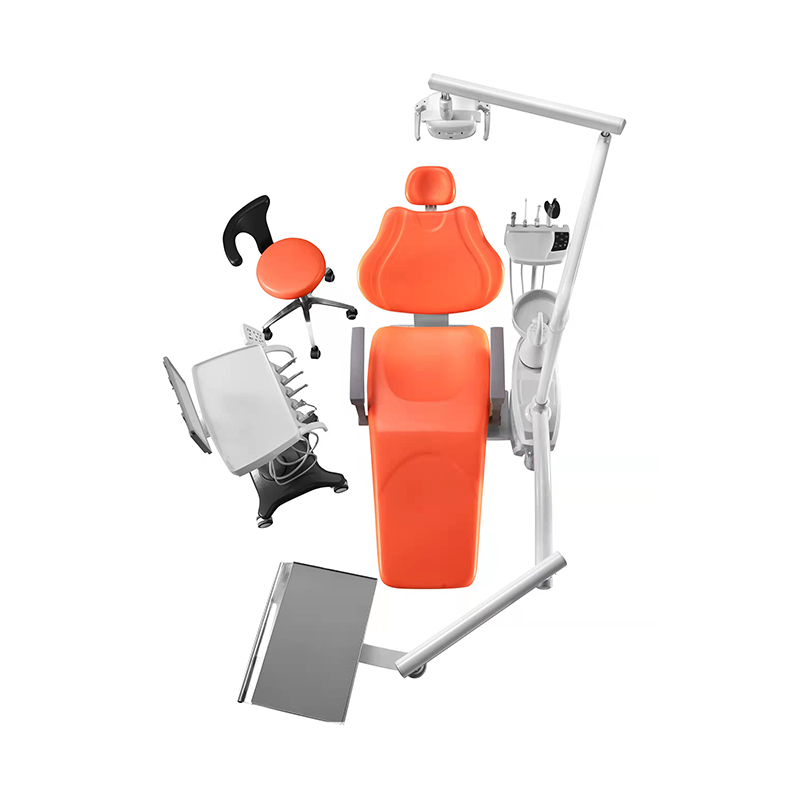
The delivery system dictates how you access handpieces, air-water syringes, and suction. Your choice fundamentally shapes daily clinical choreography.
Over-the-patient delivery remains the industry standard. It pulls the instrument tray directly over the patient's chest. This setup minimizes the operator's reach. However, it places sharp instruments directly in the patient’s sightline. This visibility can elevate anxiety for fearful patients. Rear and side delivery systems solve this issue. They hide instruments behind the patient. Unfortunately, rear delivery forces the dentist to twist their torso repeatedly to retrieve handpieces.
Many modern clinics favor modular setups. A basic dental chair with trolley provides exceptional flexibility. Cart delivery systems operate independently from the main seating structure. They connect via an umbilical cord to the utility center.
There are distinct advantages and disadvantages to this approach. It keeps instruments entirely out of the patient's view until needed. You can roll the trolley to different sides of the operatory, accommodating both left- and right-handed operators easily. Furthermore, repairing a trolley takes less effort. Technicians can service the cart without dismantling the main seating unit. The main drawback involves floor space. A rolling trolley requires a slightly larger operatory footprint for easy maneuverability.
Feature | Over-the-Patient | Trolley / Cart Delivery |
|---|---|---|
Patient Anxiety | High (Instruments visible) | Low (Instruments hidden) |
Ergonomics | Excellent (Minimal reach) | Good (Adjustable placement) |
Maintenance | Complex (Integrated plumbing) | Simple (Standalone unit) |
Space Required | Minimal | Moderate |
A smart equipment purchase looks far beyond the initial price tag. You must evaluate the long-term financial impact of your choices.
Choosing the absolute cheapest initial option often backfires. Low-quality plastics crack under daily chemical disinfection. Weak pump seals fail after a few months. When equipment fails, you lose revenue for every hour the operatory sits empty. Downtime costs rapidly outpace any savings gained from a cheap initial purchase. You must budget for long-term operating expenses, including replacement valves, upholstery repairs, and routine technician visits.
You can still outfit a clinic economically without risking catastrophic failures. Finding affordable dental unit equipment requires strategic compromises. Establish firm rules for your purchase. Never compromise on the core motor mechanism or the frame material. Cast iron or heavy-duty aluminum bases provide necessary stability. Cheap plastic bases flex and break over time. Delivery unit valves must utilize brass or high-grade stainless steel.
You can save money in several specific areas. Choose standard seamless upholstery instead of premium leather upgrades. Omit built-in multimedia monitors. Most clinics can mount standard flat screens to the wall for a fraction of the cost. Skip integrated ultrasonic scaling units if you already own standalone tabletop models. By stripping away luxury accessories, you protect your budget while securing commercial-grade core mechanics.
Global commerce makes it easier than ever to procure clinic equipment. However, sourcing internationally demands strict diligence and technical verification.
Procuring directly from a dental chair supplier China or other international manufacturing hubs offers substantial cost advantages. You must navigate this process carefully to ensure quality and compliance. Use a strict verification checklist. Demand unedited CE or ISO 13485 regulatory certificates. Verify these certificates through official databases. Ask the manufacturer for a video factory tour. Request reference contacts from clinics operating in your specific region.
Apply the "Replacement Parts" test before committing to any purchase. Ask the supplier directly about the lead time and cost for a replacement solenoid valve or a new foot pedal. A reputable vendor will provide a clear price list and immediate shipping estimates. If they hesitate, give vague answers, or ignore the question, do not buy from them. Parts availability dictates the lifespan of your investment.
Read the Service Level Agreement closely. You must ensure the contract clearly separates parts warranties from labor warranties. Many overseas suppliers offer generous five-year parts warranties. However, they rarely cover local labor. You must identify local technicians who are willing to service international brands. Confirm who will handle the actual installation and plumbing integration before the crates arrive at your clinic door.
Outfitting a primary care practice requires disciplined decision-making. You must balance ergonomic access for the operator, durable core components, and verifiable long-term value. Avoid getting distracted by luxury features meant for specialized surgical suites. Focus heavily on seamless infection control and patient weight capacities. The right configuration will protect your spine and keep your daily schedule running smoothly.
Your next step is to shortlist two or three models that fit your specific operatory dimensions. Request detailed estimates covering three years of consumables and replacement parts. If you attend a trade show or visit a local showroom, test the physical geometry yourself. Sit in the operator stool and ensure your knees fit under the backrest. By demanding transparency and prioritizing reliable functionality, you will easily secure the ideal dental chair for primary clinic operations.
A: A high-quality unit typically lasts between 10 and 15 years. Achieving this lifespan requires strict adherence to routine maintenance schedules. You must lubricate moving parts and replace O-rings regularly. Signs of end-of-life include persistent hydraulic fluid leaks, structural frame cracking, or unsupported electronic software.
A: Both systems work exceptionally well if built to commercial standards. Electromechanical motors operate quieter and are often more affordable and easier to repair locally. Hydraulic models offer incredibly smooth movements and superior heavy-duty lifting capacity. Your choice depends entirely on your budget and preferred service technician availability.
A: Start by checking regulatory compliance databases for valid CE or FDA certifications. Ask the vendor for a comprehensive list of internal component brands. Reputable manufacturers use globally recognized internal parts, like Linak motors or Faro tubing. Finally, demand transparent warranty terms regarding parts shipping times.


