
- All
- Product Name
- Product Keyword
- Product Model
- Product Summary
- Product Description
- Multi Field Search


Views: 0 Author: Site Editor Publish Time: 2026-06-12 Origin: Site


Equipping a new practice or upgrading an existing operatory involves significant capital expenditure. The price gap between basic and luxury dental equipment often exceeds $10,000 per unit. Practice owners constantly face a difficult dilemma. They must balance strict upfront budget constraints alongside long-term reliability. You must also account for practitioner ergonomics and overall patient perception. Making the wrong choice can lead to physical fatigue or costly maintenance delays. Finding the right sweet spot is rarely simple for clinic owners. This article provides an objective, evidence-based breakdown of the structural, functional, and financial differences between entry-level and premium alternatives. We will help you make a risk-adjusted procurement decision for your business. You will discover the actual features driving these price gaps. We also clarify when an economical choice makes the most sense.
Core Functionality: Both tiers perform the same essential functions, but high-end chairs offer superior integration, specialized ergonomics, and programmable tech.
Total Cost of Ownership (TCO): An affordable chair offers rapid ROI for startups, but evaluating warranty terms and spare part availability is critical to avoid high maintenance costs.
Practitioner Health: Premium chairs heavily invest in narrow backrests and optimal pivot points to reduce dentist fatigue during long procedures.
Compliance is Baseline: Regardless of the price tier, verifying a CE ISO dental chair unit ensures standard safety and operational reliability.
Buyers often wonder why two chairs looking functionally identical carry vastly different price tags. The answer lies in the base materials, underlying mechanics, and built-in technology. Manufacturers build basic models using standard polyurethane finishes and highly durable plastics. They usually rely on conventional electromechanical lifting mechanisms. These components keep production costs low while maintaining core functionality.
Premium models take a completely different manufacturing approach. They feature solid cast aluminum base plates for maximum stability. You will find seamless memory foam upholstery covering the patient seating area. Luxury units utilize ultra-quiet, smooth fluid-drive hydraulics. These high-end fluid systems eliminate sudden jarring movements. They ensure the patient remains perfectly still during delicate clinical work.
Technology and integration create another massive price divide in the market. Entry-level setups rely on basic foot pedals. You must manually adjust the delivery arms. They feature standard analog control panels. Premium alternatives provide sophisticated touchpad controls and programmable memory positions. They offer integrated intraoral cameras. They route scalers and curing lights seamlessly through the main delivery unit.
You must also distinguish between paying for tangible value and a brand premium. Legacy manufacturers often charge extra for their established nameplates. Always evaluate if that extra cost translates to actual clinical efficiency. You should never pay more just for a logo.
Inspect the base plate material carefully before making a purchase.
Test the hydraulic lifting speed under a simulated patient load.
Check the delivery arm resistance to ensure smooth positioning.
Review the control panel layout for intuitive daily operation.
Feature Category | Basic Models | Premium Models | Clinical Impact |
|---|---|---|---|
Construction Materials | Polyurethane, heavy duty plastics | Cast aluminum, memory foam | Improves durability and accelerates cleaning speed |
Lifting Mechanism | Standard electromechanical motors | Fluid-drive hydraulic systems | Reduces ambient noise and minimizes patient anxiety |
Delivery Systems | Manual adjustment arms, analog buttons | Touchpad screens, programmable memory | Increases workflow speed and assistant integration |
Cable Management | Externally routed exposed tubing | Internally routed seamless tubing | Enhances operatory hygiene and removes tripping hazards |
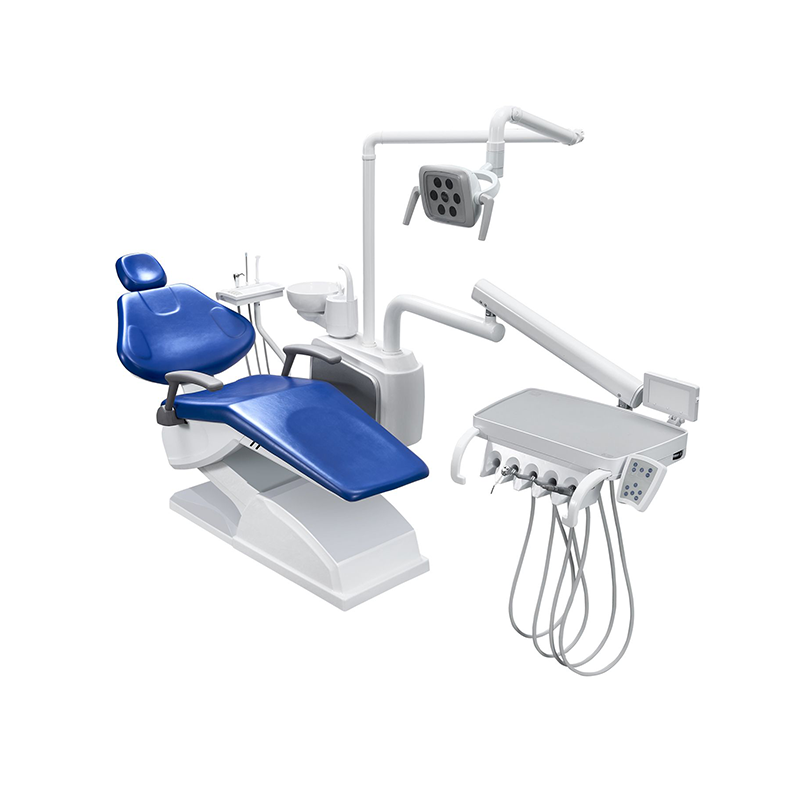
Purchasing an affordable dental chair provides clear business advantages. It significantly lowers the barrier to entry for start-up clinics. You minimize initial debt by selecting economical equipment. A lower capital outlay ensures a faster break-even point per operatory. This strategy keeps your cash flow healthy during those critical first years.
Implementation realities also favor budget-friendly choices. A basic dental unit for clinics usually requires a much simpler installation process. Plumbers and electricians can connect them quickly without specialized training. However, they may lack future modularity. Upgrading them later with advanced technology is often difficult or impossible.
Critics frequently point out potential long-term risks. High-wear parts like standard upholstery and external tubing often have a shorter lifespan. You might face fewer ergonomic adjustments for the headrest and backrest. This structural limitation may not suit all patient types. Standard chairs often struggle to accommodate bariatric patients comfortably.
Despite these limits, budget-friendly units have an ideal deployment zone. They work perfectly in dedicated dental hygiene rooms. You can use them effectively in secondary operatories or pediatric spaces. Newly established, cost-conscious practices rely on them heavily to launch their businesses successfully.
Ignoring the weight capacity limits of the base plate.
Forgetting to test the backrest thickness for leg clearance.
Assuming all replacement parts are universally available locally.
Overlooking the material quality of the assistant's suction arm.
Premium equipment offers a hidden return on investment through practitioner ergonomics. Dentists frequently suffer from cumulative musculoskeletal strain. High-end models feature ultra-narrow backrests and dual-articulating headrests. They utilize an optimal base footprint. These deliberate design choices allow you to sit much closer to the patient. You avoid unnatural bending, twisting, and reaching.
Patient experience strongly justifies the higher upfront cost. Luxury chairs offer plush seating and optional massage functions. Their seamless physical movement calms high-anxiety patients during stressful visits. Premium-fee practices use this psychological impact to reinforce their upscale brand positioning. Patients perceive higher clinical value when they sit in pure luxury.
Workflow efficiency improves drastically when you upgrade. Fully integrated delivery units reduce reaching distances. They save precious seconds per procedure. This optimized setup streamlines the assistant's daily workflow. Four-handed dentistry becomes incredibly fluid and natural.
Finally, you must carefully consider longevity and resale value. Premium chairs often last 15 to 20 years in a busy clinic. You experience minimal operational downtime. They also retain significantly higher trade-in values when you eventually decide to upgrade your clinic.
Dual-articulating headrests support the patient's neck perfectly.
Ultra-thin backrests provide maximum knee clearance for the dentist.
Swivel base mechanisms allow flexible operatory positioning.
Integrated touchpad screens prevent cross-contamination during adjustments.
Selecting the right equipment requires a systematic, logical approach. You must evaluate your options objectively. Follow this proven matrix to navigate the dental unit product range effectively.
Step 1: Define your primary clinical focus. Assess your daily operations carefully. A high-volume hygiene room needs entirely different equipment than an operatory dedicated to lengthy endodontic or full-arch implant procedures. Match the chair to the procedure length.
Step 2: Calculate long-term financial impact over a 10-year horizon. Look far beyond the initial sticker price. Factor in the upfront purchase cost, estimated yearly maintenance, and potential downtime risks. A cheap chair breaking down constantly costs more overall.
Step 3: Assess infrastructure compatibility. Evaluate your current plumbing, electrical capacity, and operatory square footage. Determine if your space supports a heavy, high-end integrated unit. Sometimes, a modular basic unit is strictly required for smaller rooms.
Step 4: Formulate a shortlisting logic. Compare multiple equipment options side-by-side. Evaluate at least two affordable models and one premium model. This direct comparison helps you benchmark actual feature-to-outcome value before making a final commitment.
Following this matrix prevents emotional purchasing decisions. You ground your choice in practical clinical realities. Always involve your lead dental assistant in this selection process. Their workflow relies heavily on the unit's physical design and functionality.
Certain industry benchmarks remain strictly non-negotiable regardless of your budget. Regulatory baselines always come first. You must insist on a verifiable CE ISO dental chair unit. This global certification ensures standard electrical safety and operational reliability. It protects your patients whether you spend $3,000 or $15,000.
Warranty transparency requires your careful inspection. Look past the simple number of "years" covered in the brochure. Examine what the contract actually includes in writing. Differentiate clearly between coverage for replacement parts, physical labor, and technician travel time. Some warranties only ship parts, leaving you to pay hefty hourly labor fees.
Supply chain and support logistics dictate your true clinical uptime. Local technician availability matters immensely for your daily operations. Guaranteed access to spare parts keeps your clinic running smoothly. An economical chair remains cost-effective only if unexpected downtime is kept to an absolute minimum.
Verify the CE ISO documentation directly with the manufacturer.
Ask for a detailed breakdown of labor costs under warranty.
Confirm the average shipping time for critical replacement valves.
Check reviews regarding the vendor's after-sales technical support speed.
There is no universal "best" chair for every single clinic. Practice owners must weigh their immediate budgets against their daily clinical demands. Consider these final actionable takeaways as you move forward:
High-end chairs act as powerful risk-reduction tools for established practices. They focus heavily on practitioner ergonomics, workflow efficiency, and maximum patient comfort.
Budget-friendly chairs serve as highly viable, profitable tools for startups. They accelerate your break-even point and preserve your initial operating capital.
Strict regulatory compliance and comprehensive warranty standards remain mandatory for any equipment tier. Never compromise on basic patient safety.
Your next action is straightforward. Request detailed specification sheets from multiple equipment manufacturers. Test the chair's physical articulation in person or demand detailed video demonstrations. Always prioritize the vendor's support infrastructure before finalizing your purchase order.
A: Focus on 7–10 years of reliable use with routine maintenance. You will need to replace high-wear items like upholstery and external tubing during this period. In contrast, premium models often exceed 15 years of operational life.
A: Modularity has distinct structural limitations. You can typically upgrade external devices like monitors, curing lights, or standalone scaling units. However, upgrading internal delivery systems and base hydraulics is generally impossible without replacing the entire unit.
A: They are not strictly necessary, but experts highly recommend them. Lengthy procedures like full-arch implants require extreme patient stability. Premium chairs provide superior practitioner posture support, reducing physical fatigue during complex, hours-long operations.


