
- All
- Product Name
- Product Keyword
- Product Model
- Product Summary
- Product Description
- Multi Field Search


Views: 0 Author: Site Editor Publish Time: 2025-09-04 Origin: Site


When you use an ultrasonic cleaner for dental equipment, the machine sends sound waves through a cleaning solution. These waves make tiny bubbles that pop and take away dirt, bacteria, and plaque from every surface. They even clean the small spaces in a retainer or other dental tools. This process is called cavitation. It helps you clean places that are hard to reach by hand. You get a safer and cleaner tool for every dental job. Studies show ultrasonic cleaning machines can make tools easier to sterilize and safer to use.
Ultrasonic cleaners use sound waves to make tiny bubbles. These bubbles clean dental tools very well. They reach even the smallest spaces.
This way of cleaning is faster than scrubbing by hand. It is also safer for dental staff. It helps save time and lowers the chance of spreading germs.
Always use the correct cleaning solution. Follow the instructions carefully. This helps clean well and keeps dental tools working longer.
Using ultrasonic cleaners often keeps dental equipment safe for patients. It also helps improve oral health care.
Pick a professional-grade ultrasonic cleaner for your clinic. This will give you the best cleaning results.
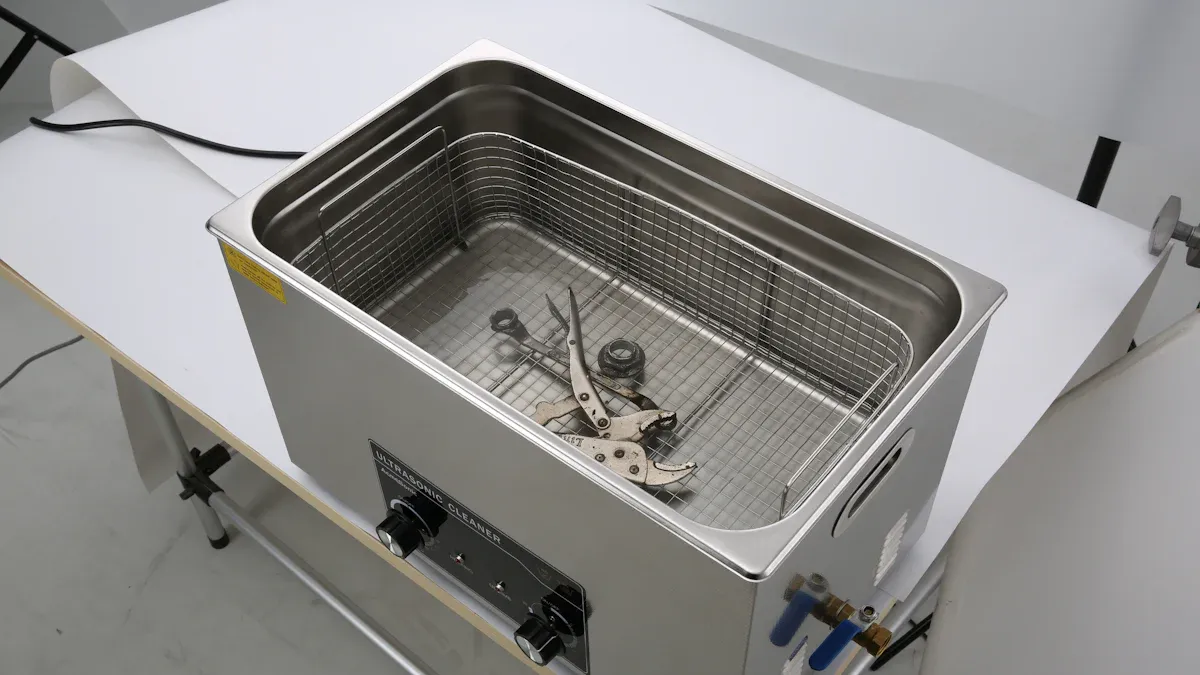
An ultrasonic cleaner helps remove dirt and germs from dental tools. This machine uses sound waves in a liquid to clean things. The sound waves make tiny bubbles that pop and lift away dirt. You do not need to scrub or use strong chemicals to get things clean.
Ultrasonic cleaning works by sending sound waves through a liquid. These waves make bubbles that pop against the tool’s surface. The popping bubbles knock off tiny bits of dirt. This way, every part of the tool gets cleaned, even if it has a strange shape. It works well for dental tools with lots of small parts.
Many dental offices use ultrasonic cleaners. They help clean tools fast and safely. This method is good for tools with small or hard-to-reach parts. You can use it for metal or plastic tools, but always check if your tool is safe to clean this way.
FOSHAN KEJU MEDICAL APPARATUS CO.,LTD is a top company for dental equipment. They make dental units and dental air compressors for dentists. You can trust them to make good products for your dental office.
You can use an ultrasonic cleaner for many dental tools. This includes tools you use every day at work. Here are some things you can clean:
Most dental tools can go in an ultrasonic cleaner.
Some handpieces should not be cleaned this way.
Tools with plastic, glue, or special metals may not be safe.
Always read the instructions for each tool before cleaning. Put tools in a mesh basket so they do not get damaged. Fill the tank with the right cleaner and set the timer and temperature.
Before you start, fill the tank with the right cleaner. Make sure the water is at the right level. Run a degas cycle if you need to. Put tools in a mesh basket so they stay safe. Set the timer and temperature for how dirty the tools are.
Ultrasonic cleaners help keep dental tools safe and ready to use. They help protect patients and make work easier for dental staff.
When you put dental tools in an ultrasonic cleaner, something called cavitation happens. The machine sends sound waves through the cleaning liquid. These waves make lots of tiny bubbles. The bubbles form and pop very fast. This popping is called cavitation.
The bubbles act like tiny scrubbers. They clean every part of your dental tools. Even small cracks and corners get cleaned. Cavitation is great for cleaning tools with lots of details. The bubbles take away dirt, bacteria, and biofilm you cannot see. You do not need to scrub or use strong chemicals.
Cavitation works best on tools with tricky shapes. The bubbles can reach rough spots, like grooves in retainers or dental implants. This helps you clean places that are hard to reach by hand.
Here is a table that shows what scientists have learned about cavitation in ultrasonic cleaning:
Findings | Description |
|---|---|
Cavitation Patterns | Happens at the end of the scaler tip and gets stronger with more power. |
Tip Displacement | Bigger movements make more cavitation. |
Imaging Techniques | Special cameras and lasers help study how cavitation works. |
Cavitation Generation | More bubbles form near hard edges than soft ones. |
Vibration Amplitude | More energy makes more cavitation happen. |
Scaler Design | Smaller tips make more bubbles and clean better. |
Cavitation helps you clean dental tools very well. It removes dirt from even the smallest places.
Ultrasonic waves are important for cleaning dental tools. The machine sends high sound waves through the liquid. These waves make bubbles that scrub away dirt. The sound waves reach every part of your tools. Brushes cannot reach these tiny spaces.
Cavitation: High sound waves make tiny bubbles that pop and scrub away dirt.
Penetration: Bubbles reach into small cracks of dental tools for a deep clean.
Efficiency: You can clean many tools at once, which saves time.
Ultrasonic cleaners remove things like blood and proteins.
This cleaning method is safe and lowers the chance of getting hurt or sick.
You get a safe and fast way to clean your tools. The sound waves do not harm your dental equipment. They help keep your tools safe and in good shape.
The frequency of the sound waves matters for cleaning. Most dental offices use cleaners with 80 kHz to 130 kHz. This range gives a gentle but strong clean. It also keeps your tools safe for patients.
Frequency Range | Cleaning Efficiency | Instrument Safety |
|---|---|---|
80 kHz - 130 kHz | Gentle but thorough cleaning | Safe for patient use |
Cavitation bubbles work best on tools with lots of small parts. They clean rough spots and tiny cracks, like on retainers and dental implants. Ultrasonic cleaning works better than cleaning by hand, especially for tools with complex shapes.
You can trust ultrasonic cleaning to remove bacteria and biofilm from every part of your dental tools. This helps keep your patients safe and your tools in great condition.
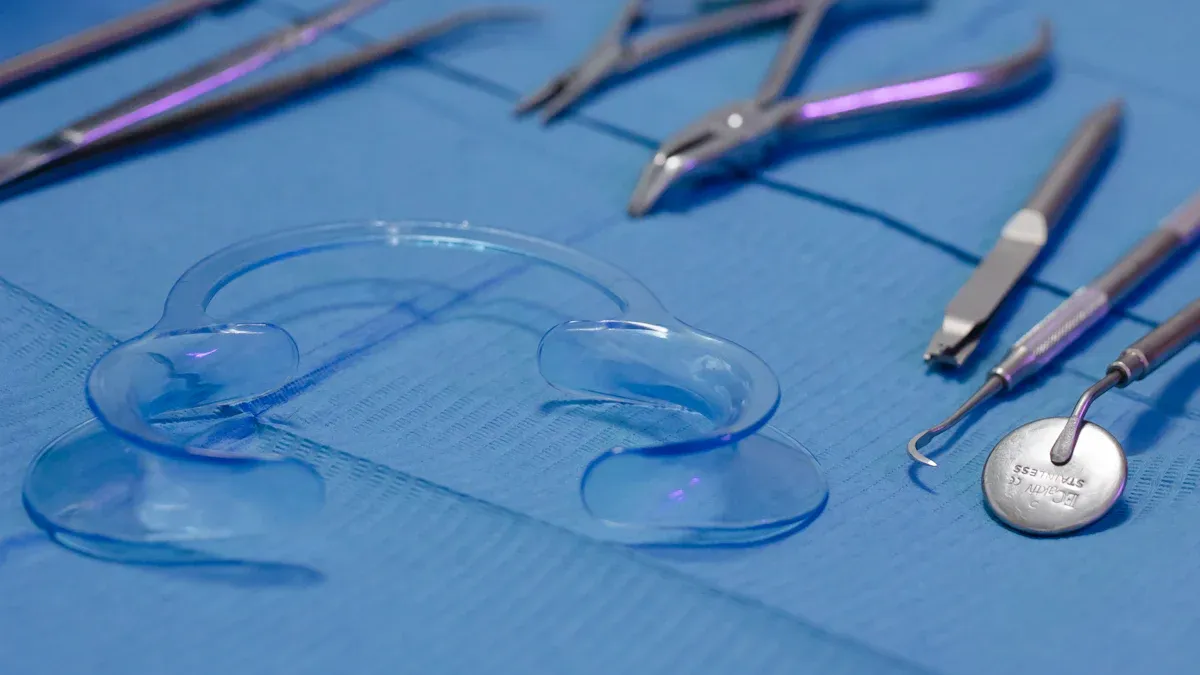
You must get your dental tools ready before cleaning. First, check that the ultrasonic cleaner is clean and has no old dirt. Fill the tank with the right cleaning liquid. Follow the instructions from the maker. Put your dental tools in a mesh basket or tray. Make sure each tool is under the liquid. Do not put too many tools in at once. If you do, the machine will not clean well.
Tip: Keep your dental tools in a germ-killing or enzyme soak until you clean them. This helps remove blood and tissue. It also helps clean better.
Always use a cleaning liquid made for dental tools. Set the time and temperature before you start the machine. Rinse tools under cool water below 40⁰C first. This stops proteins from getting hard. Use deionized or distilled water, not tap water. Tap water can leave minerals on your tools.
An ultrasonic cleaner can clean your dental tools very well. Here is how you use it for dental tools and retainers:
Fill the tank with cool water and add the right cleaner.
Put dental tools and retainers in the basket. Make sure they do not touch.
Run the machine for 10 minutes before adding tools to remove air from the liquid.
Set the timer for 3-10 minutes, based on how dirty the tools are.
Turn on the machine and let the sound waves clean.
When done, take out the tools and rinse them under cool water.
If your retainer still has dirt, use a small brush to clean it.
Note: Test your ultrasonic cleaner often with aluminum foil to make sure it works. Change the cleaning liquid every day for best cleaning.
After cleaning, you must take care of your dental tools and retainers. Rinse all tools and your retainer well to wash off any leftover cleaner. Let them air dry on a clean towel or drying stand. Do not use hot air, as it can hurt some materials. Put dental tools in a clean container. Keep your retainer in its case to keep it safe.
Dental groups say you should check if your cleaning liquid is clear. If it looks dirty, change it so your tools get cleaned well.
This cleaning method helps you remove harmful dirt and germs. Ultrasonic cleaners help you keep dental tools and retainers safe for patients.
You want your retainer clean and fast. Ultrasonic cleaning machines save you time. Cleaning by hand takes longer because you have to soak and scrub. Ultrasonic cleaners finish the job much faster. You just put your retainer in the machine, add cleaner, and let it work. This gives you more time for other things at your dental office.
Ultrasonic cleaning equipment uses sound waves to clean every part of your retainer. The bubbles from the machine remove dirt and bacteria from small cracks and tight spots. This means your retainer and dental tools get cleaned well. Studies show ultrasonic cleaning equipment removes biofilm as well as old methods. Guided Biofilm Therapy (GBT) uses these machines to clean biofilm safely and gently.
Evidence Type | Description |
|---|---|
Study | In 2022, Vouros and others found that ultrasonic piezo-electric instruments remove biofilm as well as traditional scaling and root planing. |
Context | This study is part of Guided Biofilm Therapy (GBT), which uses ultrasonic cleaning for biofilm management. |
GBT keeps enamel and roots safe.
It lowers soft tissue problems.
Patients feel better with GBT.
Ultrasonic denture cleaners and cleaning equipment help you keep up with retainer care and denture cleaning.
Ultrasonic cleaning machines help keep your dental tools and retainers safe. The equipment cleans small spaces and removes germs that hand cleaning can miss. This process kills bacteria and helps sanitize your tools. You lower the risk of spreading germs in your clinic.
Ultrasonic cleaning equipment cleans detailed dental tools.
It removes dirt and germs.
You lower the chance of spreading germs between patients.
Patients trust your clinic more when you use these machines.
Ultrasonic denture cleaners also protect your retainer from harm. Scrubbing by hand can scratch or break your retainer. The gentle action of the machine keeps your retainer in good shape. This helps you take care of your retainer and supports your cleaning routine. You also help your patients have better denture cleaning and oral health.
You might wonder how ultrasonic cleaning machines compare to cleaning by hand. The table below shows the main differences:
Feature | Ultrasonic Dental Cleaning | Manual Cleaning Methods |
|---|---|---|
Cleaning Efficiency | Better, cleans small spaces | Not as good, misses hard-to-reach spots |
Cross-Contamination | Lower risk because you touch tools less | Higher risk because you scrub and handle tools |
Time Efficiency | Faster, usually 5-15 minutes | Slower, takes longer for deep cleaning |
Instrument Damage | Less likely to damage tools if used right | More likely to damage tools from scrubbing |
Consistency | Same results every time | Results change based on how you clean |
Employee Safety | Safer, less chance of getting hurt | More risk of getting hurt by sharp tools |
Ultrasonic cleaning machines give you a safer, faster, and more reliable way to clean your retainer and dental tools. You help every patient have better oral and denture cleaning. Cleaning your retainer with an ultrasonic machine becomes part of your daily routine. You get good cleaning and better results for your dental tools and retainer.
Tip: Use ultrasonic cleaning equipment in your retainer care routine for the best cleaning of your retainer and dental tools.
When picking an ultrasonic cleaning machine, think about your clinic’s needs. Here are some features you should look for:
The size and how much it can hold are important. Choose a professional-grade ultrasonic cleaner that fits the number of tools you clean daily.
How well it cleans depends on the ultrasonic technology and frequency. Machines with 20 kHz to 40 kHz work well for dental instruments.
Easy-to-use controls help you learn fast. Digital screens and timers make cleaning simple.
Strong tanks last longer. Stainless steel tanks do not break easily.
It should be easy to take care of. Pick a model that is simple to drain and refill.
Safety features like automatic shut-off and temperature control keep your tools and staff safe.
A good warranty and after-sales service help you worry less.
FOSHAN KEJU MEDICAL APPARATUS CO.,LTD makes professional-grade ultrasonic cleaners for dental clinics. Their products follow strict quality rules.
Tip: Always check the tank size and frequency before buying. This helps you pick the right ultrasonic cleaning machine for your work.
The cleaning solution you use in your ultrasonic cleaning machine matters. Enzyme-based solutions are best for getting rid of organic dirt. Optizyme Ultra D and Getinge Enzymatic Plus work well, especially at higher temperatures like 40°C. The right amount and water temperature help clean better.
Use cleaning solutions made for dental ultrasonic cleaners.
Hotter water and longer cleaning times help remove tough stains.
Always follow the instructions for using an ultrasonic cleaner and cleaning solution.
Note: Change the cleaning solution every day for the best cleaning and hygiene.
You can keep your ultrasonic cleaning machine working well by doing these things:
Clean the tank after each use or at least once a day.
Only use cleaning solutions made for dental equipment.
Check often to see if the machine is cleaning well.
Make sure all tools are under the liquid so dirt comes off.
Keep the lid on while it runs to stop germs from getting in.
Sterilize tools after ultrasonic cleaning to keep them very clean.
FOSHAN KEJU MEDICAL APPARATUS CO.,LTD gives good help and advice for taking care of your machine. Their professional-grade ultrasonic cleaners help you keep your clinic clean and safe.
Ultrasonic cleaning is a strong way to keep dental tools and your retainer safe for everyone. It takes away tiny germs and helps stop infections by using special cleaner technology.
Cleaning the right way with ultrasonic methods keeps patients safe and helps your dental tools last longer.
Deep cleaning gets into every part of your retainer.
You save time and get clean, gentle results.
Using an ultrasonic cleaner lowers the chance of spreading germs and keeps workers safer.
You do not have to buy new tools as often because your instruments last longer.
Contact FOSHAN KEJU MEDICAL APPARATUS CO.,LTD if you want help or want to make your clinic’s cleaning better.
Clean dental equipment with an ultrasonic cleaner after each use. This keeps your tools safe for every patient. It also stops germs from spreading. Cleaning every day helps your tools last longer.
Most dental tools can go in an ultrasonic cleaner. Always read the instructions from the maker first. Some handpieces and fragile items need extra care.
Use enzyme-based solutions or ones made for dental ultrasonic cleaners. These help break down dirt and remove stains. Always follow the directions for mixing and changing the solution.
Test your ultrasonic cleaner with aluminum foil. Put foil in the tank and turn on the machine. If you see small holes or wrinkles, your cleaner is working.
Yes, you must sterilize dental equipment after using an ultrasonic cleaner. Ultrasonic cleaning takes away dirt and germs. Sterilizing kills all bacteria and viruses.


