
- All
- Product Name
- Product Keyword
- Product Model
- Product Summary
- Product Description
- Multi Field Search


Views: 0 Author: Site Editor Publish Time: 2026-08-03 Origin: Site


Purchasing a left right hand dental chair solves the headache of operatory sharing. It immediately expands scheduling flexibility for multi-doctor practices. However, this flexibility introduces significant mechanical complexity into your clinic. You gain operational freedom but risk structural instability. Poorly engineered ambidextrous chairs routinely create workflow bottlenecks. They cause unexpected plumbing complications. Over time, they often develop frustratingly "wobbly" delivery systems. These structural issues aggravate staff members. They compromise patient comfort and delay critical treatments.
We provide a rigorous, skeptical evaluation framework in this guide. Practice owners and clinic managers can use it effectively. We will help you separate durable, true-ambidextrous units from clunky retrofits. You must understand these mechanical nuances before committing capital. You will learn exactly what ergonomic and structural details dictate long-term clinical success.
Mechanism Efficiency: A viable left right hand dental chair must convert safely in under 60 seconds without heavy lifting.
Hidden Infrastructure Constraints: Umbilical management and floor box placement dictate whether a chair will actually work in your specific operatory footprint.
The "Triple Ergonomic" Standard: True ROI requires evaluating the setup from the perspective of the left-handed dentist, the assistant, and the patient's safety during the transition.
Long-Term Durability: More moving parts mean higher wear; scrutinizing the warranty on the pivot mechanism is non-negotiable.
You must define specific success criteria before making this investment. A premium chair should maximize your operatory utilization rates. It must effortlessly accommodate associate dentists regardless of their handedness. This capability future-proofs your clinic scheduling. You no longer need to reserve specific rooms for left-handed practitioners. Every operatory becomes universally functional. We consider this universal functionality the ultimate benchmark for operational success.
You must balance the premium price against practical utilization. Ambidextrous units cost more upfront. However, they drastically reduce idle operatory time. Empty rooms drain clinic profitability. A versatile chair keeps your schedule tightly packed. It eliminates the downtime caused by mismatched practitioner schedules. Your practice recovers the initial premium through consistent, daily patient flow.
Buyers must ruthlessly apply the "Afterthought Test" during selection. You need to check if the left-handed configuration equals the right-handed setup. Many manufacturers design primarily for right-handed users. They simply bolt on left-handed capabilities later. Left-handed practitioners frequently complain about these compromised designs. They often feel cramped or experience limited instrument reach. You must sit in the chair. You must test the layout yourself. True ambidextrous equipment feels entirely native in both configurations. It never feels like a forced afterthought.
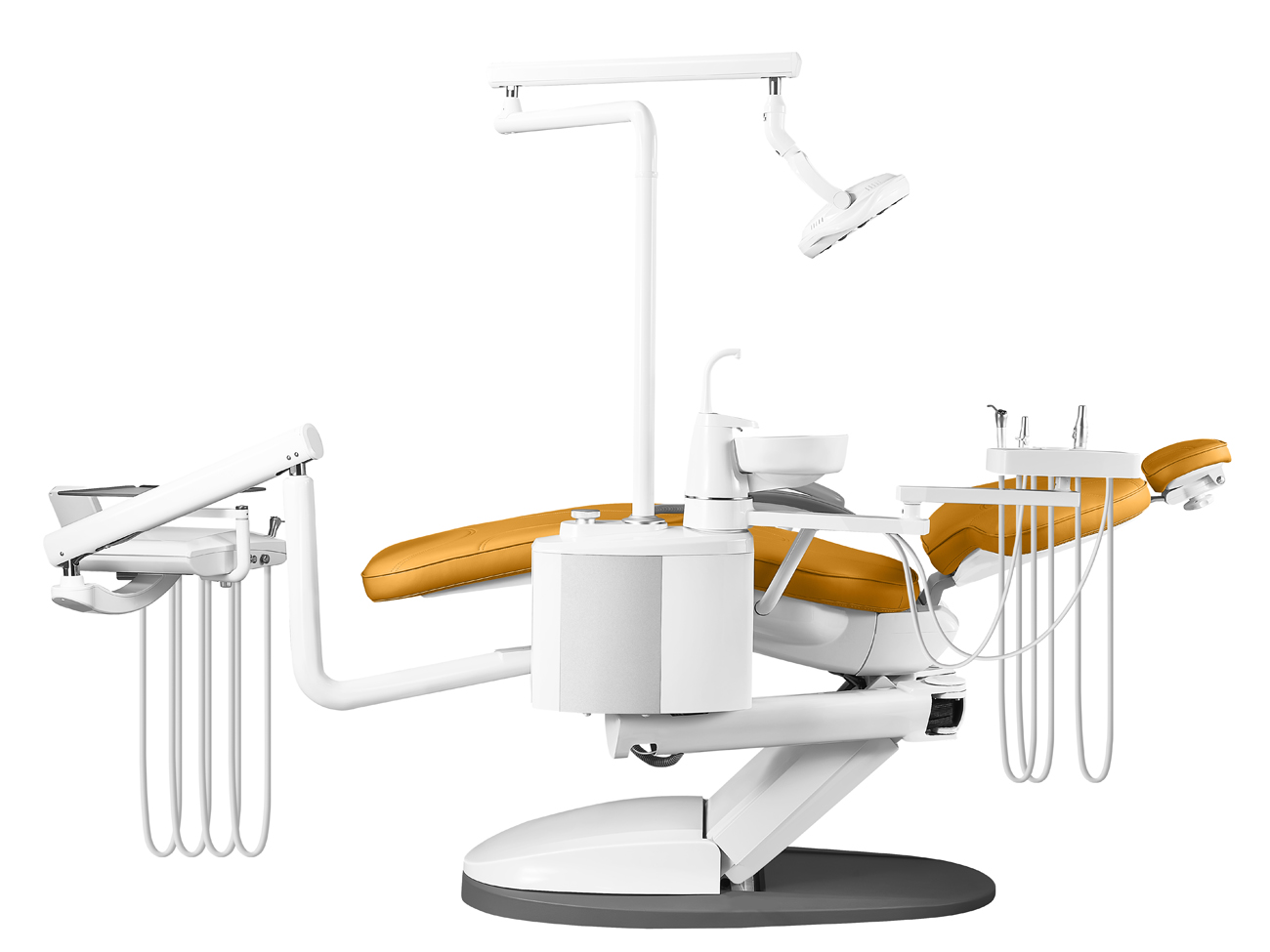
Clinic staff must switch the chair's orientation effortlessly. We enforce a strict 60-second rule for this process. Assistants need to transition the operatory between patients rapidly. A slow conversion mechanism ruins your daily schedule. It creates compounding delays throughout the morning. The motion should feel completely fluid. It must require zero specialized tools. One assistant should comfortably perform the entire transition alone.
You must carefully assess the underlying pivot mechanics. Engineers typically use three primary transition designs. We see floor-mounted track systems, base swivels, and chair-mounted cantilevers. Each design impacts the ease of conversion differently.
Mechanism Type | Primary Advantage | Common Drawback | Best Use Case |
|---|---|---|---|
Base Swivel | Highly stable, minimal moving floor parts. | Requires massive central clearance. | Large, open-concept operatories. |
Floor-Mounted Track | Very smooth glide over long distances. | Tracks collect dust and debris easily. | Clinics with stringent daily cleaning protocols. |
Chair-Mounted Cantilever | Keeps the floor completely clear. | High stress on the internal chair frame. | Compact rooms needing maximum floor space. |
Weight and physical resistance require serious testing. You must test the delivery system and assistant arm swing physically. Clinicians should not require excessive physical force. Locking the delivery unit into its new position must feel crisp. Heavy, dragging components cause repetitive strain injuries for dental assistants. We highly recommend testing the friction levels. Do this multiple times in the showroom. Ensure the release levers engage and disengage reliably.
Patient clearance dictates transition safety. You must check the arc of the swing. The delivery unit must pass smoothly. It usually swings over the toe board or around the patient chair headrest. Collisions risk damaging expensive handpieces. Furthermore, swinging heavy equipment directly over a patient's face causes extreme anxiety. A premium system routes the arms safely away from the patient's immediate visual field.
You must verify focal distance and tool reach first. The dentist requires a neutral spinal posture continuously. They should maintain this whether operating on the left or right side. Straining to reach the high-speed handpiece causes long-term back fatigue. Assess the pedal placement carefully. The rheostat must move freely during the switch. The umbilical cord for the pedal should never tangle. It must stretch comfortably to either side of the base.
You must evaluate the reachability of critical instruments. Assistants need immediate access to the HVE and saliva ejector. The curing light must remain within arm's reach. Test these tools in both right-handed and left-handed configurations. Ensure the assistant instrumentation doesn't become trapped. Sometimes, arms become awkwardly angled post-transition. This forces the assistant to lean dangerously over the patient. A compromised assistant workflow destroys clinical efficiency. It severely slows down complex restorative procedures.
Assess the overall stability of the entire chair unit carefully. True ambidextrous units require robust base engineering. Weak engineering leads to micro-movements during procedures. We call this the dreaded "wobble" effect. Wobble degrades patient comfort instantly. It makes them feel unsafe and anxious. When the dentist applies pressure, the chair must remain rock solid. You can test this easily. Push firmly against the delivery head. Watch for any corresponding sway in the main patient seat.
Hidden infrastructure constraints often ruin seemingly perfect purchases. You must understand how floor box constraints impact installation. Placement of utility boxes dictates umbilical routing. A Left-Right Hand Dental UnitDental Chair Unit requires highly specific plumbing layouts. Buyers must verify compatibility early. Check your existing plumbing and vacuum lines. Standard central floor boxes rarely accommodate the dual-sided reach perfectly. You might need to trench new lines into your concrete slab.
Umbilical cord management separates premium chairs from cheap alternatives. We strongly warn against units with exposed umbilicals. Poorly routed cords drag heavily on the floor during a switch. They catch on practitioner stools. This creates dangerous tripping hazards for your staff. Dragging also causes premature wear on the external casing. A ruptured air line shuts down the operatory entirely. Look for internal routing channels. The best units hide cables inside articulated arms.
You must calculate your spatial clearances meticulously. We provide a simple framework for measuring the operatory room.
Measure the absolute total width from side cabinet to side cabinet.
Determine the maximum swing arc of the delivery arm.
Calculate the required clearance for the assistant arm rotation.
Add twenty inches of buffer space for safe staff movement.
The chair requires a wider functional footprint than standard models. It must accommodate the dynamic swing arc of both arms. Proximity to existing rear cabinetry must be calculated precisely. If the delivery head hits a drawer during the transition, the chair is useless in that room. Always use masking tape on your clinic floor. Tape out the exact maximum footprint before ordering.
Wear and tear factors escalate rapidly in ambidextrous models. More moving parts equal higher inherent failure risks. You introduce tracks, bearings, and lock-release levers into the ecosystem. Each joint represents a potential point of mechanical failure. Dirt accumulates in floor tracks. Bearings lose their lubrication over time. Lock levers snap under heavy daily usage. You must accept these realities. A standard chair sits still. An ambidextrous chair functions like a complex sliding machine.
Warranty scrutiny requires intense buyer vigilance. We heavily advise buyers to look past the generic coverages. Do not just accept the standard warranty brochure. You must check the specific coverage terms. Focus entirely on the ambidextrous pivot mechanism. Many manufacturers offer a five-year general warranty. However, they quietly limit the pivot joints to one year. This limitation signals a lack of engineering confidence. You should demand matching coverage for all structural transition mechanisms.
Field evidence provides the ultimate purchasing confidence. Do not rely solely on sales representatives. We always recommend requesting clinic references directly. Ask for contacts at multi-doctor clinics. Find practices using the specific model for over three years. Call them and ask about long-term stability. Inquire about replacement part availability. If a proprietary locking lever breaks, can the vendor ship it overnight? Real-world references reveal the true durability of the equipment. They expose flaws hidden during pristine showroom demonstrations.
You must apply strict shortlisting logic to find the perfect equipment. Start your evaluation funnel with footprint compatibility. If the chair cannot swing cleanly in your room, discard the option immediately. Next, filter the remaining candidates by conversion smoothness. Your assistants must transition the room effortlessly in under 60 seconds. Finally, finalize your decision by comparing warranty depth on the moving parts.
We encourage buyers to take action physically. Do not buy complex mechanical equipment purely from a catalog. Visit a showroom or a major dental trade show. Test the conversion mechanism repeatedly. Bring your lead assistant along for their feedback. Additionally, involve your equipment technician early in the process. Ask your contractor to review the utility routing. You must verify floor box compatibility before signing any purchase order. Proper preparation guarantees long-term clinical flexibility and operational peace of mind.
A: Under 60 seconds. It should be a toolless, fluid motion easily performed by a single assistant. If the transition requires multiple staff members or heavy lifting, the mechanism is poorly engineered. Speed is critical for maintaining daily scheduling efficiency between patient appointments.
A: Often, yes. Centralized or customized floor box positioning is usually required. This ensures umbilical cords reach both sides without stretching or tangling. Standard right-side plumbing layouts frequently cause cord dragging or pinch points when converting to a left-handed configuration.
A: They carry higher risk simply due to the added moving parts. Quality hinges and track systems are critical. The constant shifting introduces structural stress. This reality makes premium brands a safer bet for this specific chair category, as their engineering tolerances are much tighter.


