
- All
- Product Name
- Product Keyword
- Product Model
- Product Summary
- Product Description
- Multi Field Search


Views: 0 Author: Site Editor Publish Time: 2026-09-28 Origin: Site


Clinic owners and procurement managers frequently encounter immense frustration during equipment upgrades. You sit down to compare multiple vendor quotes for new clinical setups. A low base price initially catches your eye. However, these seemingly attractive numbers almost always exclude critical functional components. Proposals from different manufacturers severely lack structural standardization. You attempt to compare them without a clear framework. This common mistake quickly leads to massive budget overruns during the final site setup. You need a highly transparent, line-by-line configuration checklist. We designed this comprehensive guide to help buyers evaluate complex vendor invoices accurately. You will learn exactly how to identify hidden charges before signing any contract. You will also discover how to standardize your comparisons effectively across different brands. By mastering this process, you protect your capital investment and ensure smooth clinical operations from day one.
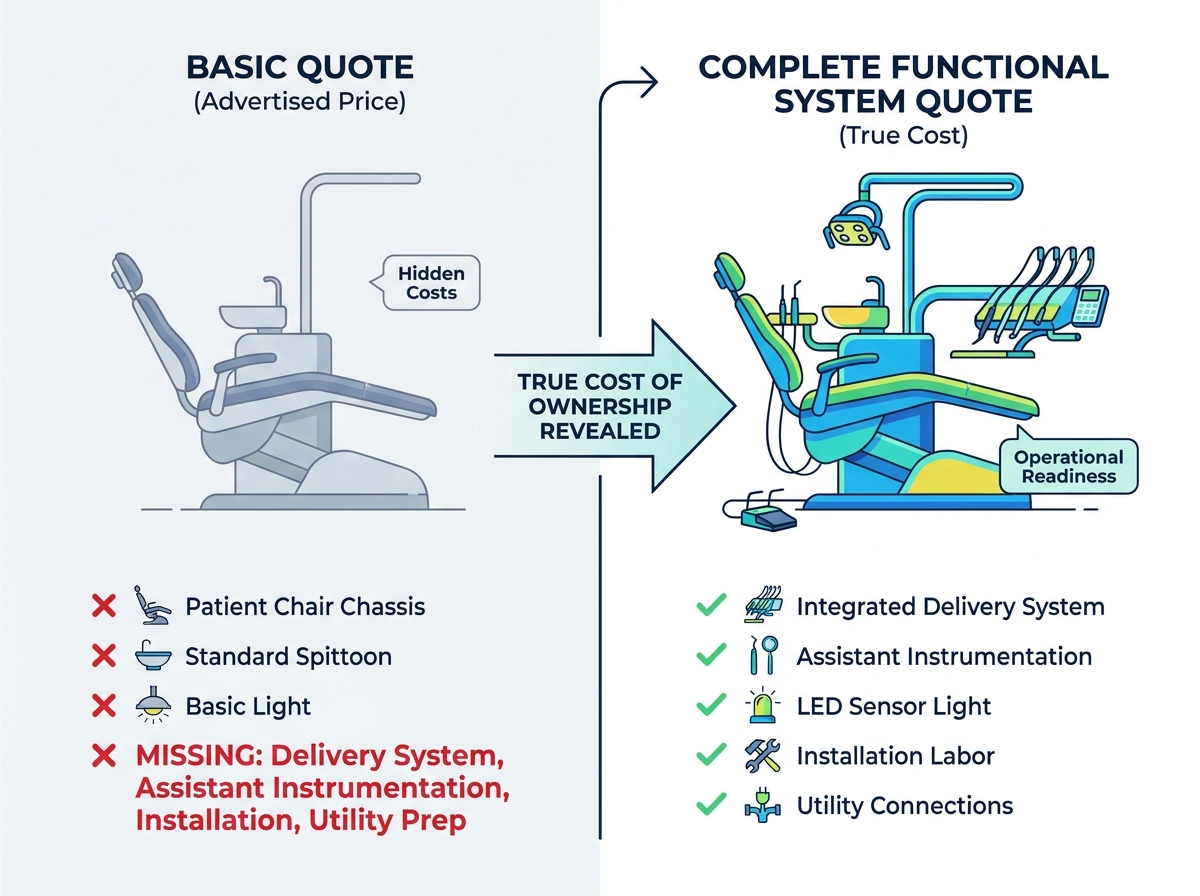
Always verify if the quote reflects a complete functional system or just the patient chair chassis.
Standardize your RFP (Request for Proposal) to ensure competitors quote the same delivery systems, upholstery, and lighting grades.
Facility preparation and dental chair installation labor are frequently omitted from base hardware quotes, significantly altering the final cost.
Scrutinize warranty terms to differentiate between "parts-only" guarantees and fully covered service level agreements (SLAs).
You must understand industry terminology before evaluating any equipment proposal. Sales representatives frequently use terms interchangeably. This confusion often leads buyers to assume certain features come standard. Establishing a clear baseline prevents costly post-purchase surprises. An entry-level package typically includes specific core components. You should expect a functional patient chair featuring standard hydraulic or electromechanical lifting mechanisms. The baseline also includes a standard spittoon, basic halogen or entry-level LED operatory lighting, and a simple foot pedal.
Many buyers misunderstand the difference between the chassis and a fully integrated system. Purchasing a standalone "chair" usually means you only receive the seating mechanics. It lacks the delivery system needed to operate handpieces. It also excludes assistant instrumentation and spittoon modules. In contrast, investing in fully integrated dental chair units provides a comprehensive operational hub. These integrated solutions bundle the seating, delivery system, lighting, and assistant modules into one cohesive platform. They ensure immediate clinical readiness upon setup.
Procurement teams often fall into a dangerous pricing trap. You might evaluate a basic dental chair quote based purely on the bottom line. Vendors sometimes strip essential utility connections to artificially lower the advertised price. They might exclude vital junction boxes required for plumbing connections. They may also omit air and water regulators. Missing these components renders the equipment useless upon delivery. You must rigorously check every proposal for these hidden omissions. Always ask your vendor if the quoted price includes all necessary utility integration hardware.
The delivery system acts as the operational brain of your clinical setup. It dictates how dentists interact with their handpieces during procedures. Different architectures carry vastly different manufacturing costs. Traditional over-the-patient systems remain highly popular. They offer straightforward mechanics and lower upfront costs. Continental whip-arm systems cost significantly more. However, they drastically reduce practitioner wrist fatigue by managing tubing weight. Rear-delivery systems hide intimidating instruments from anxious patients. They require specialized cabinetry integrations, driving up the final invoice price.
You must scrutinize the handpiece tubing specifications on your line-item quote. Vendors frequently default to basic 4-hole Midwest tubings to save money. Modern clinics often require 6-pin fiber optic tubings for illuminated handpieces. Upgrading these lines after the initial purchase wastes both time and budget. You should also check for integrated scaler components. Many base quotes exclude built-in ultrasonic scalers. Verifying these integration specifics prevents daily operational bottlenecks.
Upholstery choices directly impact both patient comfort and daily clinic maintenance. Standard seamless upholstery offers exceptional budget friendliness. It features a smooth surface devoid of stitching. This design prevents bacteria accumulation and simplifies your daily disinfection protocols. Standard upholstery serves perfectly well for short hygiene appointments or high-volume practices.
Conversely, plush or memory foam upgrades demand a higher upfront investment. These premium materials feature intricate stitching and superior padding. They dramatically increase patient retention during lengthy restorative procedures. Patients heavily associate physical comfort with the quality of clinical care received. You must weigh the higher initial cost against the benefits of improved patient satisfaction.
Operatory lighting technology has shifted dramatically in recent years. Older halogen models generate excessive heat and consume significant electricity. Modern clinics prioritize sensor-controlled LED operatory lights. These advanced fixtures offer touchless activation, preventing cross-contamination during messy procedures. They also provide adjustable color temperatures for accurate shade matching. Ensure your quote explicitly lists LED technology rather than outdated halogen alternatives.
The assistant’s instrumentation arm requires equally rigorous evaluation. Standard configurations might only include a basic saliva ejector. A fully functional clinic needs comprehensive moisture control. Verify the inclusion of high-volume evacuators (HVE) on the line item. You should also check for integrated curing lights. Having these tools directly on the assistant’s module streamlines four-handed dentistry workflows.
Delivery System Architecture Comparison
Architecture Type | Primary Benefit | Cost Profile | Best Use Case |
|---|---|---|---|
Traditional (Over-the-Patient) | Unrestricted handpiece access | Budget-friendly | Standard operatories and hygiene rooms |
Continental (Whip-Arm) | Reduces wrist fatigue | Moderate to High | Long restorative procedures |
Rear-Delivery | Conceals instruments from patients | High (requires custom cabinets) | Pediatric or high-anxiety patient care |
Establishing a reliable benchmark helps you navigate confusing equipment proposals. You need a practical example of a balanced, value-oriented configuration. The KJ-915 dental unit serves as an excellent standard for expanding clinics. It represents a solid mid-tier baseline. Analyzing this model demonstrates exactly what standard inclusions you should expect for a reasonable capital investment. It eliminates the guesswork when comparing overly complex competitor spreadsheets.
A reliable mid-tier platform like this includes specific operational loadouts. You should expect ergonomic synchronization between the backrest and seat cushion. This synchronized movement prevents patient repositioning during chair adjustments. Integrated LED lighting with adjustable intensity should come standard. A rotatable ceramic cuspidor offers superior durability compared to cheap plastic alternatives. These features represent essential functionality rather than unnecessary luxury add-ons.
Analyzing specific benchmark models provides a powerful ROI perspective. Clinics must differentiate between core clinical necessities and over-engineered premium bloat. Some high-end brands charge exorbitant premiums for proprietary touchscreen interfaces or luxury styling. These aesthetic upgrades rarely increase practice revenue. They simply drain your initial startup capital. By anchoring your expectations to a solid, reliable benchmark, you protect your budget. You ensure your investment directly supports efficient patient treatment and steady cash flow.
The equipment itself represents only a portion of your final financial commitment. Utility and infrastructure preparations frequently blindside unexpecting clinic owners. Your new equipment must connect to existing plumbing, air compressors, and central vacuum lines. Compatibility issues arise frequently during this phase. Does your central vacuum system support wet or dry suction? Are the specific floor valves and brass adaptors included in the quote? Vendors often exclude these small but crucial infrastructure components.
Shipping and logistics phrasing can obscure massive financial liabilities. Sales reps frequently quote "FOB factory" pricing. This means you assume all financial responsibility the moment the crate leaves the manufacturing floor. You pay for the freight transport. "Curbside delivery" means the trucking company drops a heavy wooden crate in your parking lot. They will not bring it inside. You must negotiate for "white-glove inside delivery" to ensure professional handlers place the unboxed equipment directly in your operatory.
Municipal health codes mandate strict compliance add-ons. Unfortunately, national equipment vendors rarely account for local municipal regulations. They often exclude these mandatory accessories from their standard pricing.
Amalgam Separators: Required by environmental protection agencies to filter heavy metals from wastewater before it enters municipal sewers.
Backflow Preventers: Essential municipal requirements that stop contaminated clinic water from siphoning backward into the public drinking supply.
Air Compressor Regulators: Necessary moisture filters that prevent internal tubing degradation caused by humid clinic environments.
Waterline Purification Systems: Often sold separately, these systems maintain ISO standards for clean procedural water.
Proper equipment deployment requires highly specialized technical knowledge. You cannot rely on standard local contractors for this phase. A comprehensive dental chair installation entails precise floor template alignment. It requires meticulous pressure testing for air and water lines. Technicians must calibrate handpiece drive air and verify precise voltage metrics. You must clarify who bears the financial burden for this authorized technician. Manufacturer warranties usually demand validation by a certified installer. If the vendor excludes this labor, you face significant out-of-pocket expenses before seeing your first patient.
Warranty documents frequently conceal dangerous financial traps. Buyers often celebrate seeing a "5-year warranty" on their proposal. However, you must look closely for the explicit split between parts and labor coverage. Many manufacturers exclusively offer parts-only guarantees. They will ship you a replacement solenoid valve for free. However, local technical labor routinely costs upward of $250 per hour. A parts-only warranty remains practically useless if you cannot afford the specialized technician required to install the part.
Equipment longevity depends entirely on strict preventative maintenance schedules. O-rings degrade, filters clog, and hydraulic fluids require routine bleeding. We strongly recommend negotiating a 12-month service level agreement (SLA). Bundle this SLA directly into your initial capital expenditure quote. Securing proactive maintenance upfront prevents catastrophic mid-procedure equipment failures. It guarantees priority emergency response times and minimizes expensive clinical downtime.
Comparing disparate quotes requires a rigid analytical framework. You cannot effectively evaluate a traditional delivery system against a continental one if they feature different lighting grades. You must force vendors to bid on identical technical requirements.
Establish a Baseline Specification: Define exact requirements for tubing types, lighting tech, and upholstery grades.
Distribute a Standardized RFP: Send identical feature requests to three or four distinct vendors.
Normalize the Quotes: Add missing freight or installation costs to proposals that suspiciously omitted them.
Evaluate the Support Ecosystem: Score vendors based on their guaranteed technician response times.
Vendor vetting extends far beyond the initial purchase price. You must assess the distributor's local parts inventory. Ask them where they warehouse replacement components. If a critical circuit board fails, you cannot afford to wait weeks for international shipping. Assess their emergency response SLA. A reliable distributor should guarantee a technician on-site within 24 to 48 hours of a reported critical failure.
Your final next action requires firm communication. Take the insights from this guide and build an itemized configuration checklist. Send this comprehensive document back to your sales representatives. Demand a finalized, "no-surprises" quote. Force them to detail shipping logistics, infrastructure adaptors, and exact labor costs in writing. This assertive approach protects your practice from predatory sales tactics and ensures a smooth operational launch.
Evaluating clinical equipment proposals demands strict attention to granular details. Looking past the bottom-line price tag remains critical for achieving true operational readiness. Hidden logistics fees, missing utility adaptors, and omitted labor charges quickly destroy careful budgeting. You secure long-term clinical success by standardizing your comparisons and verifying warranty labor terms.
Take immediate control of your procurement process today. Demand comprehensive documentation regarding your specific delivery systems, upholstery grades, and lighting requirements. Never sign a purchase order until facility specs, shipping logistics, and installation labor are confirmed in writing. By maintaining these strict purchasing standards, you guarantee a seamless transition for your practice and your patients.
A: A high-quality commercial setup typically lasts between 10 and 15 years. This lifespan depends heavily on consistent hydraulic and electromechanical maintenance. Routine servicing of O-rings, filters, and valves significantly extends operational longevity.
A: Retrofitting new delivery systems onto basic chairs presents major technical limitations. The process is highly cost-inefficient. Upgrading later requires custom mounting hardware and complex re-plumbing. Buying fully integrated systems upfront proves much more economical.
A: It depends on your clinic's existing infrastructure. You must verify junction box compatibility before purchasing. Always conduct a professional site survey to ensure your current plumbing dimensions match the new equipment templates.


