
- All
- Product Name
- Product Keyword
- Product Model
- Product Summary
- Product Description
- Multi Field Search


Views: 0 Author: Site Editor Publish Time: 2025-08-12 Origin: Site


A dental unit is a special system that helps you and your dentist during care. You see the dental unit in the middle of most dental clinics. It has a chair, tools, and safety parts to make treatment easy and safe. The design helps stop germs from spreading and keeps patients and staff safe.
Dental units use strong suction and water to control sprays, which lowers infection risks for everyone.
Knowing about the dental unit and its parts helps you understand how it makes visits safer and more comfortable.
A dental unit has a chair, tools, suction, water, and lights. These help dentists work safely and fast in one spot. Modern dental chairs are comfy with parts you can move and memory buttons. This makes visits easier and less scary. Suction and water systems keep your mouth clean and dry. They lower germs and help dentists see better when they work. Dental units have safety parts and follow strict cleaning rules. This keeps patients and staff safe from germs. Cleaning and checking dental units often keeps them working well. It also makes sure dental visits are safe and easy.
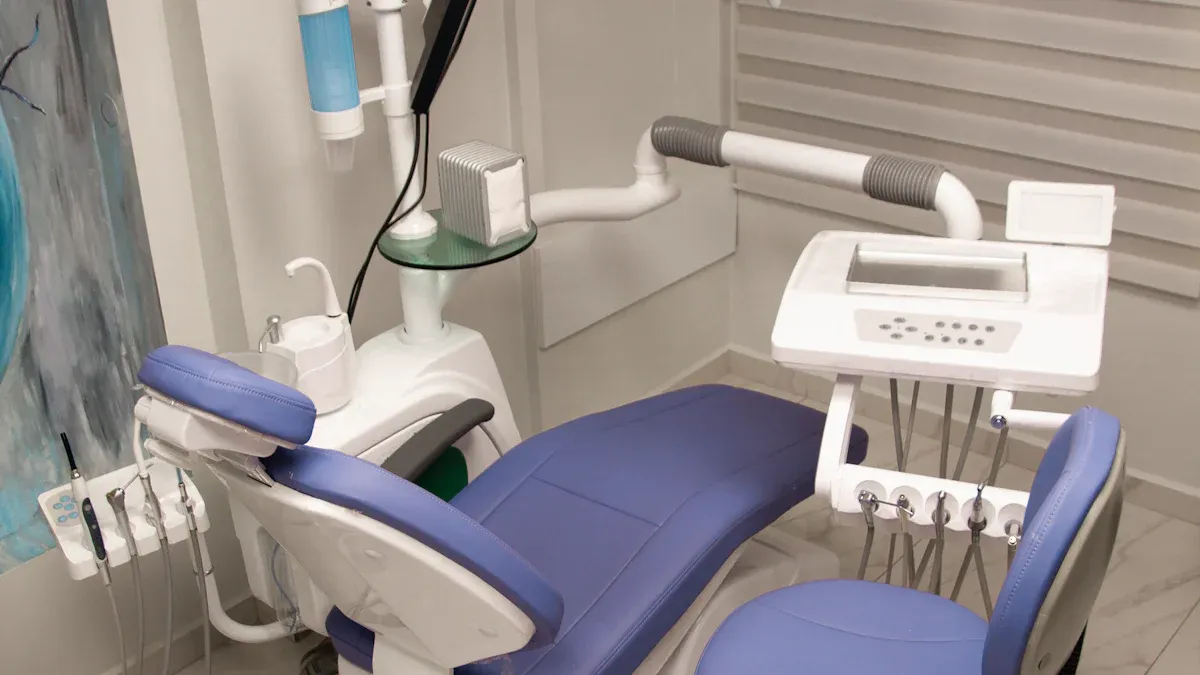
A dental unit is the main part of a dental room. It brings together the dental chair, lights, suction, water, and tools. The dental unit is not just a chair. It has many parts and helps you and your dentist work better. Everything is in one place, so visits are easier.
A dental unit is different from other dental equipment. It gives you everything needed for treatment in one spot. You do not need to move away from the chair.
Here is a simple comparison to help you see the difference:
Feature | Dental Treatment Chair | Dental Unit |
|---|---|---|
Primary Purpose | Helps you sit comfortably | Gives a full treatment system |
Functionality | Only helps with sitting | Has many tools and features |
Components | Chair, padding, controls | Chair, tools, lights, suction, water, digital parts |
Independence | Can work alone for basic checks | Needs water, air, drainage, and power |
Installation Complexity | Needs power and floor setup | Needs water, air, drainage, and power setup |
Maintenance Requirements | Needs chair and cover care | Needs care for water, suction, and electronics |
Approximate Investment | $5,000 - $20,000 | $15,000 - $100,000+ |
FOSHAN KEJU MEDICAL APPARATUS CO.,LTD makes dental units that follow world rules. Our products, like dental air compressors and dental lights, help make dental units work well.
You use the dental unit for every part of your care. It is the main station in the dental room. It helps you get safe and quick treatment. The dental unit keeps things clean and stops germs. It lets your dentist clean and disinfect everything. Your dentist wears safety gear and uses new technology, like digital pictures, to help you.
The dental unit is comfortable and helps dentists avoid pain.
It lets your dentist talk and work with other staff easily.
Your dentist can reach all tools without leaving you.
Dental units are important in every dental office. They help keep things clean, make sure your dentist finds problems, and help work go faster. Electronic dental records help your dentist manage your care and time. The dental unit helps make your visit easy and safe.
When you pick a dental office, look for dental units with ISO13485 and CE marks. These show the office cares about safety and quality.
If you want to know more about our dental units, visit our website. Our team at FOSHAN KEJU MEDICAL APPARATUS CO.,LTD can answer your questions and help you choose the best dental unit.
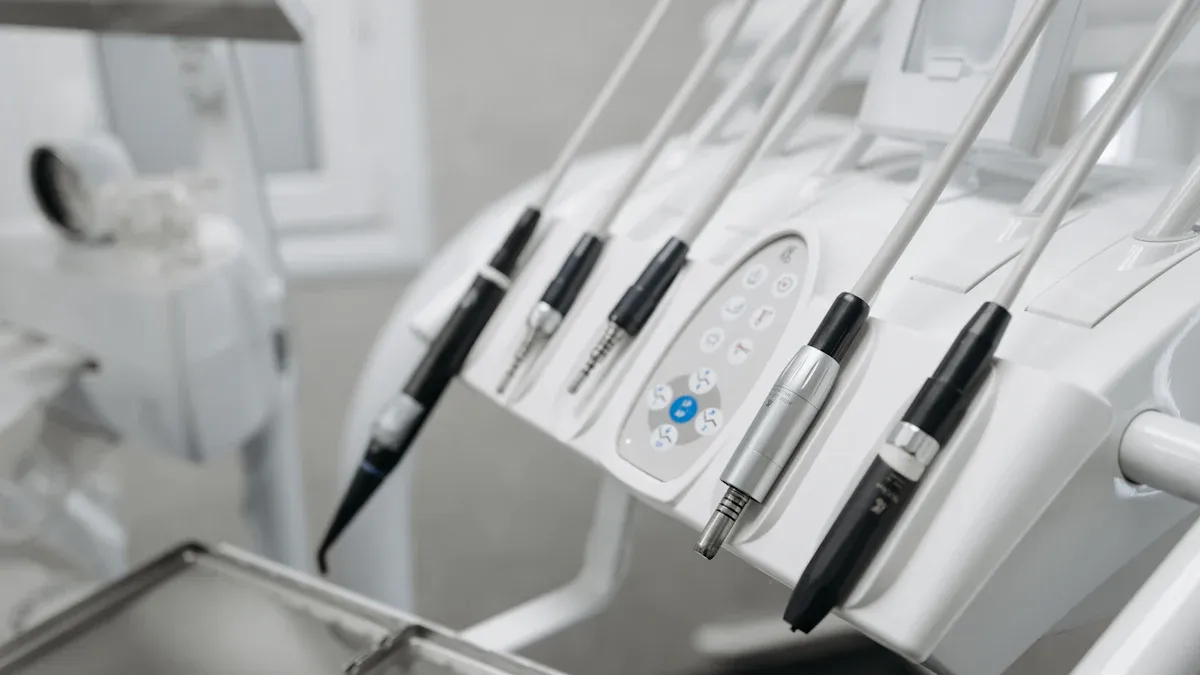
When you walk into a dental room, you notice many tools and machines. These parts of the dental unit help your dentist give you safe and comfortable care. Each part does something important. Together, they make your visit smooth.
You sit in the dental chair during your appointment. The chair is not just for sitting. It supports your body and lets your dentist reach your mouth easily. Modern chairs are made to keep you comfortable, even if you are there for a long time. The headrest and armrests can move to help your neck and shoulders. Memory buttons let your dentist pick the best position fast. The chair is easy to clean, which helps stop germs from spreading.
Tip: A good dental chair helps you feel calm and makes your visit better.
The dental chair has many important parts. Each one helps your dentist work safely and quickly. Here is a table that shows the main parts and what they do:
Component | Primary Function | Impact on Treatment |
|---|---|---|
Base | Keeps the chair steady and holds the moving parts | Makes sure you are safe and the chair is firm |
Seat/Backrest | Helps you sit in the right way and feel comfy | Makes your visit better and easier |
Armrests | Hold your arms for comfort and support | Helps you relax while getting care |
Headrest | Holds your head and neck in place | Lets your dentist work carefully |
Delivery System | Holds and gives out tools and handpieces | Needed for doing dental work |
Suction Unit | Takes away spit and bits from your mouth | Helps your dentist see and keeps things clean |
Dental Light | Shines light in your mouth | Helps your dentist see and protects their eyes |
Foot Control | Lets your dentist move the chair without hands | Keeps things clean and saves time |
These chair parts help you stay safe and comfortable. Your dentist can move the chair with their foot, which helps keep things clean.
Dental handpieces are the main tools your dentist uses to clean, drill, and polish teeth. The delivery system keeps these tools ready to use. There are different kinds of dental handpieces in the dental unit:
Type of Handpiece | Speed Range (RPM) | Common Uses | Notes |
|---|---|---|---|
High-Speed Air-Driven | 180,000 - 400,000 | Used for making holes and cutting hard tooth parts | Light and cheap, but can slow down when touching teeth |
Low-Speed Air-Driven | 100 - 20,000 | Used for cleaning, polishing, and removing decay | Can do many jobs and is easy to hold |
Electric High-Speed | ~200,000 (via gear ratio) | Used for taking off crowns and tough cases | Stays strong, makes less noise |
Electric Low-Speed | Up to 40,000 | Used for fixing crowns and removing decay | Gives more power and control |
Endodontic Attachments | ≤ 8,000 | Used for root canal work | Very careful and gentle |
Implant Handpieces | Low-speed, high torque | Used for putting in implants and surgery | Made just for implants |
The delivery system connects these tools to air, water, and power. You see tubes and buttons that control how things flow. This setup keeps tools close by, so your dentist works faster. The delivery system also has things like air-water syringes and cameras, which help your dentist check and treat your teeth quickly.
The suction unit is very important for keeping your mouth clean. It takes away spit, blood, and bits of tooth or filling. This helps stop germs and keeps your mouth dry. New suction units have special surfaces and parts you can take off to clean. This helps keep everything germ-free and makes visits faster.
The suction unit stops germs from building up inside.
Cleaning it often keeps it working well.
Some suction units use dry or half-dry systems for better cleaning.
The water supply gives clean water for rinsing and cooling, which helps you feel good and stay safe.
Note: Taking care of the suction unit and water supply is very important for stopping germs and keeping you safe.
Your dentist needs to see your mouth clearly. The dental light uses LED bulbs to shine bright, even light. You do not get much glare, so your eyes feel better. These lights are like daylight, so your dentist can see small details. The light can be moved and changed to help your dentist and you feel comfortable.
Dental lights help your dentist’s eyes not get tired.
They make sure your mouth is lit up with no shadows.
LED lights use less energy and do not get hot.
The light can be moved easily to the best spot.
The control panel is like the brain of the dental unit. Your dentist uses it to move the chair, turn on lights, and use tools. New panels have touch screens and digital displays. These make things easy and quick. Your dentist can save settings, check on the unit, and start cleaning cycles. The control panel helps your dentist work fast and safely.
The control panel changes to show only what your dentist needs.
It checks things in real time and can clean itself.
It can connect to computers to get patient info fast.
The design helps your dentist work better and not get distracted.
Dental sterilization equipment keeps tools clean and safe for every patient. You need these machines to stop germs. Some common types are steam sterilizers, chemical vapor sterilizers, dry heat sterilizers, ultrasonic cleaners, and washers. These use heat, chemicals, or sound waves to kill germs and clean tools.
Steam sterilizers use heat and pressure to clean most tools.
Ultrasonic cleaners use sound waves to shake off dirt.
Washers and disinfectors clean and kill germs at the same time.
Machines and good storage help meet world safety rules.
Sterilizing tools is a big part of dental care. Your dentist follows strict rules to make sure every tool is safe.
Remember: Dental sterilization equipment and regular cleaning keep you safe from germs and make the dental room safe.
When you sit in a dental unit, you see how all the parts work together. The chair holds you and lets your dentist move you easily. The delivery system keeps tools close so your dentist can grab them fast. Your dentist uses the operator’s console to change the chair, lights, and tools. The assistant’s instrumentation, like suction devices and saliva ejectors, helps keep your mouth clean and dry. Water and air supply systems give what is needed for rinsing and cooling. Waste management systems help keep everything clean and safe.
Here is how these parts connect:
Chair: You sit in a comfy spot while your dentist works.
Delivery System: Your dentist gets tools quickly for each step.
Assistant’s Instrumentation: Suction and ejectors keep your mouth dry.
Operator’s Console: Your dentist changes settings and positions easily.
Water and Air Supply: These help rinse and power the tools.
Waste Management System: Keeps the area clean and safe.
Modern dental units have designs that help your dentist work better. Touchscreen controls, LED lights, and imaging are often included. These features help your dentist work faster and keep you safe.
Tip: When all the dental unit parts work together, your visit is smoother and safer.
You get help from the way a dental unit makes each step easier. The tools are close, so your dentist does not need to switch between devices. This saves time and keeps things running well. Suction devices, air-water syringes, ultrasonic scalers, and curing lights are all nearby. Your dentist can focus on your care without getting distracted.
Surfaces are easy to clean and help stop germs.
Good design and less noise make you feel comfortable.
Custom setups let your dentist change the unit for different jobs.
Small size saves space in the clinic.
Digital imaging and diagnostics connect right to the dental unit. This lets your dentist plan treatments quickly and correctly. You get a safer and more comfortable visit because everything your dentist needs is close by.
Note: The workflow in a dental unit helps your dentist work quickly and keeps you safe during every procedure.
When you sit in a modern dental chair, you feel the difference right away. The chair is made to keep you comfortable from the start. The armrests are low and can lock, so you get in and out easily. The soft cushions and good fabric help your body during long visits. If you need extra help, the headrest and special supports keep you safe. The chair has a narrow back and more space for your legs. This helps your dentist reach your mouth without hurting you. The chair can turn and move with motors, so you find the best spot for your body. These features help your joints and make you feel calm and cared for. A good chair makes your whole visit better.
Memory foam cushions help your joints feel better.
Adjustable supports fit your body just right.
Chairs that lift on the side and small bases give you more space.
Balanced arms for tools stop hoses from tangling and hurting your shoulders.
Very bright lights that you can move help your eyes not get tired.
Dental units have many safety systems to keep you and the dental team safe. You see signs about covering your mouth when you cough and find tissues and masks in the waiting room. The staff learn how to stop infections and use safe tools, like needles that cover themselves. There are special boxes for sharp things close by, so used items go in right away. Your dentist wears gloves, masks, eye covers, and gowns to protect everyone. These things block fluids and germs from spreading.
PPE Component | Protective Function | Key Usage Considerations |
|---|---|---|
Gloves | Block fluids and germs | Put on before touching, change often |
Masks | Stop germs in the air | Fit well, change after each use |
Eye Protection | Block splashes | Clean and disinfect often |
Gowns | Protect skin and clothes | Use when needed, throw away right |
These safety steps help you every time you visit. They make sure the dental office is clean and safe for everyone.
Dental clinics follow strict rules to keep you healthy. Staff clean and wipe down all surfaces before and after each patient. They use heat or chemicals to kill all germs on tools. You see your dentist wash hands, wear gloves, and put on a new mask for each person. Staff use only safe cleaners and always wash their hands the right way. They also take care of water lines to stop bacteria from growing. Staff learn new health rules and get training often to stay up to date.
Cleaning takes away dirt and bits.
Disinfecting kills most germs on things you touch.
Sterilizing kills all germs on tools.
Staff wear PPE and wash hands the right way.
Water lines are checked to stop bacteria from growing.
These steps keep you safe from germs and help the dental office stay clean every time you visit.
Taking care of your dental unit keeps you safe. It also makes sure your equipment works well every time. You help by keeping things clean and checking them often. Good cleaning and care protect your health. They also help the dental unit work without problems.
You need to follow a regular plan to keep your dental unit working. This stops problems and helps everything last longer. Here are some easy steps you can do:
Look at O-rings and seals on handpieces often. Change them if they look worn.
Check vacuum valves and traps every week.
Flush waterlines for 20-30 seconds between patients. This stops buildup.
Drain water bottles every week or when not used for a while.
Change water filters if water slows down or looks dirty.
Oil handpieces as told and change aerosol filters once a year.
Clean the chair covers every day and change if ripped.
Wash vacuum traps with warm water and special cleaners.
Make sure syringes are not blocked or leaking.
Get yearly checks and tests for X-ray machines.
Use water that is safe to drink for all treatments.
Wear gloves, masks, and eye covers when touching equipment.
Use this table to help you remember what to do:
Frequency | Routine Care Tasks |
|---|---|
Daily | Turn on switches, flush waterlines, clean surfaces |
Weekly | Wash vacuum traps, check handpieces, test cleaners |
Monthly | Change filters, check emergency gear, test for germs |
Annual | Get professional checks, test X-ray machines, train staff |
Doing these steps helps keep everything clean and working well.
Sterilization is very important in dental care. You must make sure all tools and surfaces have no germs before using them. First, clean tools to remove dirt. Use heat to sterilize tools that touch soft tissue or bone. If a tool cannot take heat, use strong chemical cleaners.
Clean all tools before sterilizing.
Use heat for important items.
Use FDA-approved chemicals for items that cannot take heat.
Keep clean tools in closed cabinets.
Always follow the instructions for each step.
Wear safety gear to protect yourself while cleaning.
These steps help stop infections and keep everyone safe. Good sterilization also helps your dental unit last longer and gives better care.
Tip: Cleaning and sterilizing your dental unit often keeps it safe. If you need help, ask the team at FOSHAN KEJU MEDICAL APPARATUS CO.,LTD for advice.
You now know how a dental unit works and why it is important. Modern dental units help you and your dentist feel safe and comfortable. New features make your visit better in many ways. Chairs are quieter, so you can relax more. Digital pictures and smart tools give quick and correct results. UV sterilization and special surfaces help keep you healthy. Laser dentistry and 3D printing make treatments faster and hurt less. Teledentistry lets you get help from home if you cannot go to the clinic. When picking dental equipment, look for these features. They help you get good care and keep everyone safe and comfortable.
A dental unit helps with every dental procedure. It has a chair, tools, suction, and light. This setup lets your dentist work quickly. It also keeps you comfortable while you get care.
You sit in a chair made to feel good. The chair moves to fit your body. Soft cushions and moving parts help you relax. Your dentist can change the chair’s position fast for better care.
Sterilization keeps you safe from germs. Your dentist cleans all tools and surfaces. This stops infections and protects everyone in the office. Sterilization follows strict health rules.
Suction takes away spit and bits from your mouth. Water rinses and cools your teeth. These systems keep your mouth clean and dry. They help your dentist see better and work faster.
Modern dental units have safety systems like emergency stops and easy-to-clean surfaces. There are barriers to protect you. Your dentist wears gloves, masks, and eye covers. These features help stop accidents and keep germs from spreading.


