
- All
- Product Name
- Product Keyword
- Product Model
- Product Summary
- Product Description
- Multi Field Search


Views: 0 Author: Site Editor Publish Time: 2026-08-10 Origin: Site


Dentistry constantly demands microscopic precision from practitioners. Compromised patient positioning frequently forces dentists into awkward spinal postures. This reality directly links to rampant musculoskeletal disorders (MSD) across the profession. The risk multiplies heavily during complex procedures requiring high magnification. Using loupes or operating microscopes shrinks your visual field. A millimeter of movement feels like an earthquake. Many buyers obsess over plush upholstery or flashy delivery units during procurement. Yet, they overlook a far more critical foundation. The underlying lifting mechanism truly dictates your actual ergonomic baseline. If it drifts, you suffer the physical consequences. Our goal is to provide a comprehensive clinical and technical framework. We will explore how different lifting mechanisms directly impact micro-adjustments and patient stability. You will learn to evaluate mechanical tolerance, evaluate load capacities, and understand long-term hardware reliability. We focus on ensuring your equipment supports optimal health and procedural success without compromise.
The lifting mechanism governs focal distance stability; even 2–3 millimeters of drift can disrupt microscopic workflows.
An Electric Dental Chair utilizing dual linear actuators provides the highest baseline for repeatable memory positioning compared to pneumatic alternatives.
Evaluating a Dental Unit Chair requires testing lifting accuracy under maximum load to identify motor strain or hydraulic lag.
Long-term positioning accuracy relies on lifting systems with minimal mechanical wear, directly impacting maintenance overhead and clinical downtime.
Let us define what clinical accuracy truly means. It is not just about moving up and down. Mechanical tolerance translates directly into clinical stability. When you operate a Dental Unit Chair, a superior system maintains your exact focal length indefinitely. You never experience micro-drifting during an hour-long crown preparation. It eliminates frustrating mid-procedure readjustments completely. You stay perfectly focused on the apex. You never have to break your ergonomic posture to tap a foot pedal.
Consider the notorious "start-stop" problem found in budget equipment. Lower-tier systems often struggle with abrupt acceleration. They bounce noticeably upon deceleration. This jerky movement instantly triggers patient anxiety. When patients feel unsteady, they involuntarily tense their muscles. They slide down the backrest or shift their hips slightly. This movement destroys your carefully established operative field. Fluid motion keeps the patient entirely relaxed. Smooth deceleration preserves the clinical angle you worked hard to establish.
Memory positioning relies heavily on sophisticated internal sensors. The system uses digital rotary encoders to track mechanical movement. These components guide the chair to exact pre-programmed coordinates. They must do this consistently every single time you hit the preset button. If encoders lack resolution, memory positions slowly degrade over weeks. The chair might stop an inch too high. You find yourself manually bumping the pedal to correct it. This constant tweaking defeats the entire purpose of programmable memory. It disrupts your workflow and forces your neck into suboptimal angles.
Practitioners must understand the internal mechanisms driving their equipment. We can categorize any modern dental chair lifting system into three distinct technologies. Each offers specific benefits and notable drawbacks.
Hydraulic Systems: These rely on fluid-driven pumps and sealed cylinders. They offer massive load capacity and feel incredibly robust. Heavy patients pose no challenge for hydraulic power. However, they face distinct realities in clinical practice. Hydraulic fluid systems remain highly susceptible to micro-drifting. As internal O-rings and seals wear down, fluid bypasses the valves. The chair slowly sinks under human weight. This severely complicates precise positioning over time.
Pneumatic Lifts: These mechanisms utilize air-driven compressors to generate lift. They represent the most cost-effective solution available on the market. Unfortunately, compressed air is inherently "spongy." Air compresses unpredictably under varying patient loads. This creates a high risk of jerky movements. You lose almost all micro-adjustment capability. Pneumatic lifts struggle immensely to hold absolute zero under changing pressure dynamics.
Electromechanical Systems (Linear Actuators): These use screw-driven electric motors to drive movement. This technology serves as the strict gold standard for a modern Electric Dental Chair. High-torque DC motors turn internal threaded spindles. They provide a consistent, drift-free holding force. A mechanical screw physically cannot sink unless the motor actively turns. They offer true millimeter-precise adjustments. You must keep in mind they can be sensitive to severe voltage fluctuations in older buildings.
Let us compare these three technologies across key clinical metrics.
System Type | Primary Mechanism | Positioning Accuracy | Drift Susceptibility |
|---|---|---|---|
Hydraulic | Fluid-driven pump | Moderate to High | High over time (seal wear) |
Pneumatic | Air-driven compressor | Low (spongy feel) | Moderate (pressure drops) |
Electromechanical | Screw-driven actuator | Extremely High | None (mechanical lock) |
An electromechanical system locks mechanically into place. The interlocking threads prevent gravity from pulling the chair downward. You gain ultimate confidence in your focal distance. This remains true even during extended microsurgery sessions lasting several hours.
Clinical excellence depends entirely on a stable foundation. Certain specialties require absolute perfection from their equipment. Endodontics and implantology demand zero movement during critical operative phases. You might use heavy torque while placing a wide-diameter implant. You might work within strict millimeter tolerances during complex root canal therapy. If the chair shifts slightly, you risk catastrophic procedural failure. A rigid lift mechanism prevents disaster. It absorbs rotational forces from the practitioner without swaying.
Patient compliance improves dramatically with precise actuators. Nobody enjoys sitting in a vibrating, noisy machine. High-quality linear actuators reduce operational noise significantly. They operate quietly and smoothly. This maintains deep patient relaxation. When patients feel secure, they hold still. You reduce the annoying need for involuntary patient shifting. A calm patient allows you to work faster and safer. You spend less time managing patient anxiety and more time practicing dentistry.
We must also address practitioner ergonomics directly. Many dentists adopt a dangerous "compromise posture." They adapt their own spine to a poorly positioned chair. This happens when the chair refuses to stop exactly where needed. The dentist hunches over to find the optimum focal point. This habit destroys cervical discs and inflames lumbar muscles over a career. Precision actuators solve this completely. You adjust the chair perfectly to your ideal posture. You bring the patient precisely to your hands. You never sacrifice your back for a flawed mechanism. Your career longevity depends entirely on this absolute control.
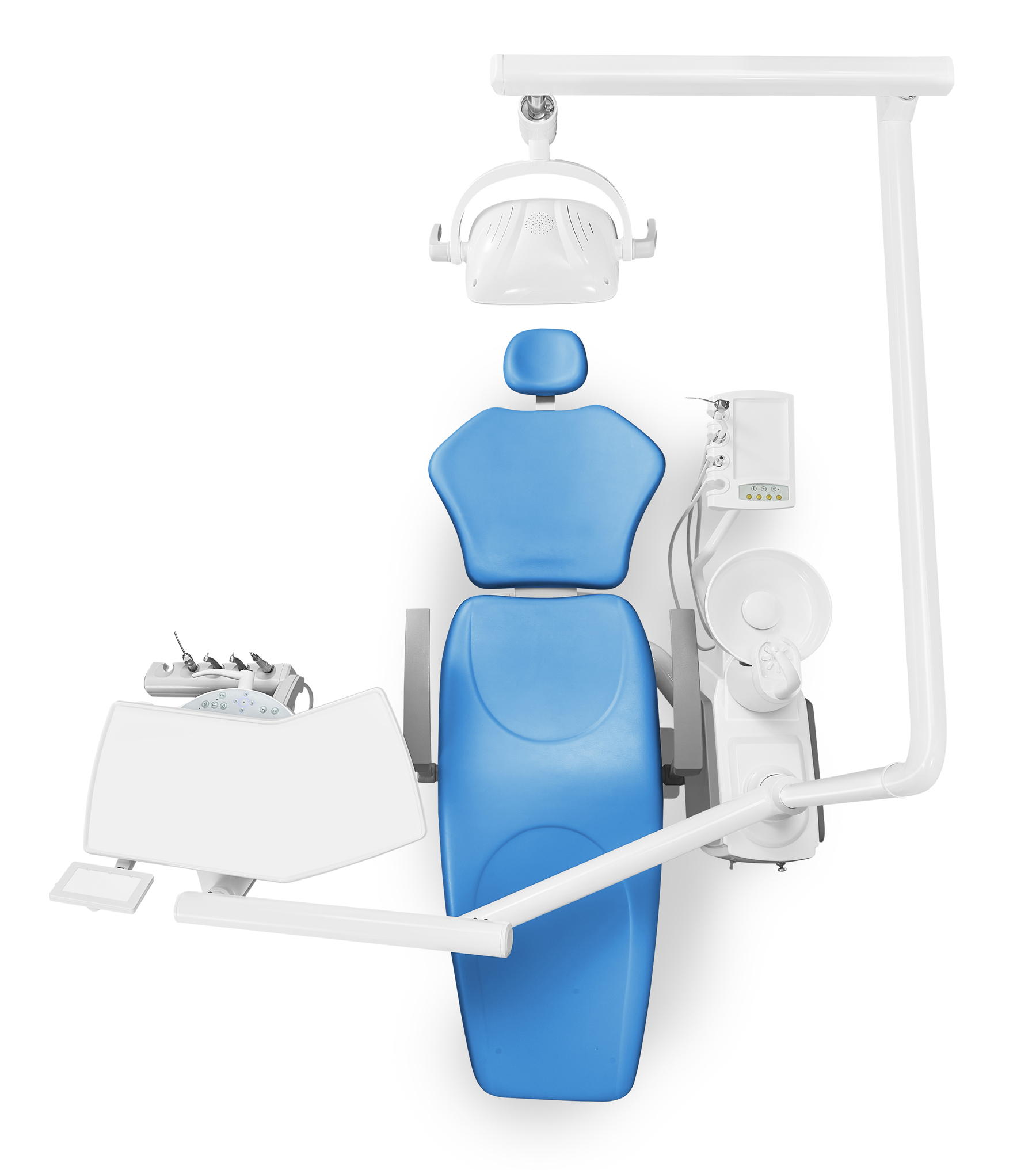
Evaluating a chair goes far beyond looking at the upholstery colors. You must test the mechanical reality hiding underneath the plastic covers. Decision-makers should apply rigorous testing before purchasing new equipment. Here are the most critical factors to assess carefully:
Load-to-Speed Degradation: You must evaluate how the system performs near its maximum weight limit. Sit two people on the chair and test it. Watch the ascent speed carefully. A severe drop in speed reveals underpowered actuators. Weak motors will overheat and fail prematurely in a busy clinic environment.
Synchronization: Advanced chairs feature intelligent articulation synchronization. The base lifting system communicates directly with the backrest actuators. As the backrest reclines, the base adjusts the seat tilt simultaneously. This prevents the dreaded "patient slide." It keeps the patient’s head perfectly positioned on the articulating headrest.
Ingress Protection (IP) and Infection Control: Clinics present extremely harsh environments for delicate electronics. Ensure the lifting column and base boast high IP ratings. They must remain fully sealed against blood, water, and saliva. The mechanics must withstand continuous chemical wipe-downs. Aggressive disinfectants can degrade internal plastics and expose wiring if not properly protected.
Compliance and Safety Mechanisms: Never assume a chair meets safety standards blindly. Verify the presence of active anti-crush sensors beneath the base. These sensors stop the lift instantly if an object blocks the descent. Always check for legitimate CE and ISO certifications for electromedical devices.
Thorough testing prevents costly procurement mistakes. You avoid buying a chair that looks great but performs poorly. You ensure safety for your staff and secure reliable mechanics for your daily practice.
Owning complex dental equipment requires clear expectations regarding long-term upkeep. You must understand the transparent maintenance assumptions for each system type. Hydraulic mechanisms demand strict routine care. Technicians must perform regular fluid checks. They must replace degrading O-rings and seals periodically. If you ignore this, the system will leak fluid and drift downwards. Conversely, electric systems remain largely maintenance-free on a daily basis. They do not require messy fluid top-offs. However, you must acknowledge a distinctly different risk. If an electric motor completely fails, you cannot simply patch a seal. You must replace the entire expensive actuator component.
We must also evaluate true lifespan expectations. Manufacturers often boast about rigorous cycle-testing data in their brochures. They might claim their actuators survive 50,000 lift cycles in a factory setting. You must translate that sterile data into real-world clinical years. An average busy dentist adjusts the chair roughly 20 to 30 times daily. This equates to thousands of cycles annually under varying patient weights. High-quality actuators should comfortably deliver ten to fifteen years of reliable service. Cheaper motors often burn out within five years of heavy use.
Finally, consider your clinic's actual infrastructural reality. Electrical lifts demand steady voltage to perform optimally. You must verify your clinic provides reliable electrical load stability. Severe power surges or chronic voltage drops harm sensitive internal circuit boards. They cause premature wear on electric actuators. Protect your investment by installing dedicated electrical circuits and medical-grade surge protectors. Proper infrastructure guarantees your lift mechanism reaches its maximum potential lifespan.
Selecting the proper foundation for your operatory directly influences your career longevity. Use clear shortlisting logic during your next equipment procurement cycle. We highly recommend prioritizing electromechanical lifting systems. They remain absolutely critical for practices heavily reliant on magnification or prolonged procedural times.
Follow these action-oriented next steps to ensure clinical success:
Demand in-person evaluations: Always request physical demonstrations from vendors before committing to a final purchase.
Conduct realistic weight tests: Test the programmable memory positions using a realistic simulated weight. Never test accuracy on an empty chair.
Verify mechanical locking: Confirm the system utilizes screw-driven linear actuators to eliminate any chance of fluid drift.
Audit your power supply: Ensure your clinic circuitry can comfortably handle modern electromechanical demands without experiencing voltage drops.
A rigid, predictable foundation removes daily physical strain. It allows you to focus entirely on delivering exceptional clinical care to your patients.
A: A sinking chair usually indicates a failing hydraulic or pneumatic system. Hydraulic cylinders rely on rubber seals to hold pressurized fluid. When these seals degrade over time, fluid bypasses the internal valves. This causes the chair to drift downward under patient weight. Pneumatic systems suffer similarly from slow air leaks. In contrast, electromechanical systems use threaded steel rods. They lock mechanically and physically cannot sink unless the motor actively engages.
A: No, modern electric systems are typically much quieter. Contemporary DC linear actuators operate well below 50 decibels. They emit a soft, consistent hum. Hydraulic systems, on the other hand, require a fluid pump to engage. This often produces a sudden, jarring mechanical noise during startup. Electric actuators prioritize smooth, quiet operation to keep patients entirely relaxed during adjustments.
A: Most manufacturers recommend annual preventative maintenance. The required tasks depend heavily on your system type. Hydraulic chairs need physical fluid checks, pressure testing, and periodic seal replacements. Electric actuators require much less invasive service. Technicians simply perform visual inspections of the spindles, check for unusual motor noise, and verify the integrity of the electrical connections and safety sensors.


