
- All
- Product Name
- Product Keyword
- Product Model
- Product Summary
- Product Description
- Multi Field Search


Views: 0 Author: Site Editor Publish Time: 2026-08-31 Origin: Site


A dental practice's operational heartbeat is its centralized air supply. Unpredictable pressure drops during complex procedures lead to disrupted workflows. They cause immediate damage to precision handpieces. Worse, inconsistent air delivery compromises patient safety during critical moments. Expanding a growing clinic or upgrading aging utility equipment requires precise capacity planning. Guessing your required volume leaves you vulnerable to sudden equipment failure. You might also waste capital on severely oversized machines. Proper dental air compressor sizing eliminates these risks entirely. You must understand exactly how much air your clinic demands at peak operation. This prevents unnecessary downtime and ensures seamless patient care. This guide breaks down the exact sizing formulas you need. We explore the essential technical specifications for modern operatories. You will also learn about hidden implementation risks. By the end, you will know how to accurately size a reliable compressor system for any multi-chair dental practice.
Never size based purely on physical chair count; calculate based on peak simultaneous utilization (active providers and hygienists).
Standard handpieces typically require 2 to 2.5 CFM at 80 PSI per active user.
Prioritize 100% oil-free, medical-grade air with integrated desiccant drying to meet regulatory compliance and protect expensive pneumatics.
Factoring in a 20-30% buffer for future practice expansion prevents premature equipment replacement.
Choosing the wrong capacity carries heavy operational consequences. We often see practices struggle because they miscalculated their baseline requirements. When you rely on incorrect calculations, your entire clinical workflow suffers daily.
Under-sizing presents an immediate danger to daily workflows. Inadequate volume causes sudden pressure drops across the clinic. This leads to handpiece stalling right in the middle of procedures. Insufficient air also causes incomplete moisture evacuation from your lines. Your compressor motor will suffer severely. When a unit is undersized, it runs constantly. This 100% duty cycle accelerates internal component wear. Excessive heat destroys internal Teflon seals rapidly. You face overheating, moisture blow-by, and inevitable mechanical failure.
Over-sizing creates equally problematic issues for your facility. You waste capital on higher upfront equipment costs. Oversized motors pull excessive electrical current. They generate tremendous heat in small utility rooms. Most importantly, oversized units suffer from short-cycling. The motor turns on and off too rapidly. This rapid cycling severely degrades the internal electrical contacts. It prevents the system from reaching optimal operating temperatures. It also increases your monthly utility bills needlessly.
Your ultimate goal is achieving a perfectly balanced system. A properly sized unit runs on a 50% to 70% duty cycle. It maintains stable air pressure during peak clinic hours. This sweet spot minimizes energy use and keeps noise levels manageable. It guarantees smooth operations for every practitioner on staff.
Three technical metrics dictate your equipment selection. Understanding them ensures you buy exactly what your practice needs.
Cubic Feet per Minute (CFM) serves as the most critical measurement. CFM dictates the total volume of air your system can deliver. Volume matters more than simple pressure. Every active handpiece consumes a specific volume of air constantly. The industry baseline typically requires 2 to 2.5 CFM per active user. If your CFM drops below demand, your tools simply stop working. Every manufacturer publishes specific CFM ratings for their tools. You must read these technical manuals carefully.
Pounds per Square Inch (PSI) measures the actual delivery pressure. Your tools require specific pressure levels to operate correctly. Standard dental handpieces usually run effectively around 80 PSI. However, modern practices often use advanced milling machines. You might also use specialized surgical pneumatics. These advanced tools often require a High-Pressure Dental Compressor. Such specialized equipment regularly demands 100+ PSI to function correctly. Continuous-use equipment like milling machines drains pressure much faster than intermittent handpieces. You must verify the specific PSI requirements of your most demanding tools.
Tank capacity represents your system's essential buffer. We measure this receiver tank volume in gallons. The tank stores compressed air for immediate use. Larger tanks allow the primary motor to rest longer between cycles. This resting period cools the generated air effectively. Cooling the air allows condensed moisture to drop out naturally. It heavily reduces the overall duty cycle. A properly sized tank is absolutely critical for multi-chair setups. It prevents the motor from running every time a hygienist uses a syringe.
You cannot simply count your physical operatories. You must calculate your true operational demand using specific formulas. Predicting usage accurately saves you from sudden equipment failure. Understanding simultaneous usage is the secret to accurate capacity planning.
The Simultaneous Use Rule is your foundational concept. In any clinic, not all chairs operate handpieces at the exact same second. We use standard utilization rates to model realistic demand. For small clinics with 1 to 3 chairs, assume 100% concurrent use. Every provider might drill simultaneously. For medium practices with 4 to 6 chairs, concurrent use drops. We typically estimate 60% to 75% simultaneous utilization. Larger practices scale down their concurrent percentage even further.
Follow this specific step-by-step calculation formula to find your baseline:
Count your active human providers. Include all working dentists and active hygienists. Do not count empty operatories or specialized recovery rooms.
Multiply your active users by their average handpiece requirements. Use 2.5 CFM per user as a safe baseline calculation.
Evaluate your continuous-draw equipment. Add the specific CFM requirements for any running milling machines or lab equipment.
Add a 20% future-proofing buffer to your final number. This handles unexpected busy periods and minor future expansions.
To clarify this process, we provided a real-world scenario comparison. This structural breakdown illustrates the differences between practice sizes.
Practice Size | Active Providers | Simultaneous Use Rate | Calculated CFM Need | Required Buffer (20%) | Final CFM Target |
|---|---|---|---|---|---|
4-Chair Clinic | 4 Providers | 75% (3 active) | 7.5 CFM (3 x 2.5) | 1.5 CFM | 9.0 CFM |
8-Chair Clinic | 6 Providers | 60% (3.6 active) | 9.0 CFM (3.6 x 2.5) | 1.8 CFM | 10.8 CFM |
This structured approach prevents overspending while guaranteeing adequate supply. Always run this math before contacting equipment vendors. It keeps your procurement process focused on actual clinical needs.
Raw power alone does not guarantee a successful installation. You must evaluate the qualitative features of modern utility equipment. Ignoring these factors leads to daily frustrations and compliance failures.
Air quality and clinical compliance remain absolutely non-negotiable. You must prioritize 100% oil-free operation for patient safety. The industry standard requires ISO 8573-1 Class 0 certification. Oil-lubricated machines risk blowing microscopic oil particles into patient mouths. This ruins composite bonding procedures instantly. Furthermore, you need integrated desiccant dryers. Dryers remove moisture from the compressed air before it enters your plumbing. This critical step prevents dangerous bacterial growth inside your pipes. It also stops internal tool corrosion, protecting your expensive pneumatics.
Noise levels heavily impact your daily clinic environment. We measure this output using decibel (dB) ratings. Compressors are inherently loud mechanical devices. If your mechanical room shares a wall with patient areas, noise matters. High dB levels cause patient anxiety and staff fatigue. Look for units featuring sound-dampening acoustic cabinets. You should also consider anti-vibration mounting pads for the floor. Strategic placement in a well-insulated utility room solves most noise issues entirely.
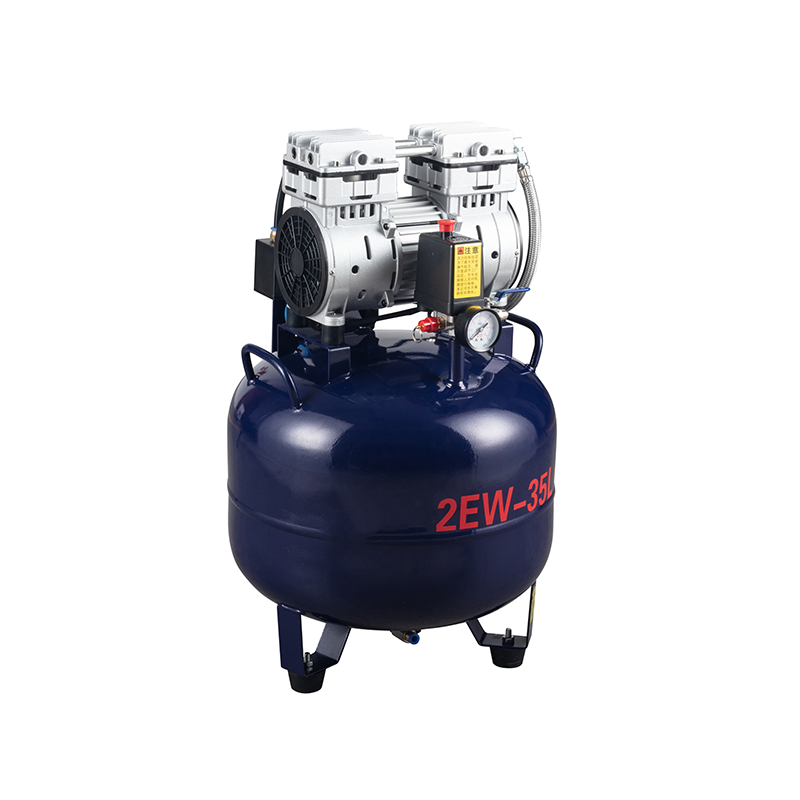
Motor configurations dictate your long-term operational reliability. You can choose between single-head or twin-head tandem setups. A standard Dental Air Compressor might use a single robust motor. However, twin-head configurations offer built-in redundancy for multi-chair clinics. If one motor fails or requires routine servicing, the other keeps running. Your practice stays open and productive. This tandem setup provides ultimate peace of mind for busy offices. It ensures you never cancel a full day of patients due to mechanical failure.
Installing new utility equipment requires careful facility preparation. Overlooking mechanical constraints often leads to immediate rollout failures. You must audit your utility room before accepting delivery.
You must verify your electrical and mechanical room capacities. High-capacity motors typically require dedicated 220V electrical circuits. Standard 110V outlets cannot handle the massive startup amperage. You also need adequate ventilation for rapid heat dissipation. A sealed utility room will trap heat rapidly. This causes thermal overload, shutting down your system mid-procedure. Install active exhaust fans if your room lacks proper climate control. Louvered doors can also help improve ambient airflow.
Plumbing dimensions dictate your actual delivery success. Your piping diameter must match the compressor's output port exactly. Installing a massive machine onto tiny legacy pipes creates severe bottlenecks. The required CFM simply cannot travel through restricted plumbing. Furthermore, never use standard PVC piping for compressed air. PVC can shatter dangerously under pressure. Upgrading your utility room might require repiping the primary distribution manifold using proper copper or specialized aluminum tubing.
Maintenance realities require proactive staff scheduling and budget allocation. Oil-free machines still need rigorous ongoing care. You must perform routine intake filter changes every few months. Desiccant dryer beads require replacement at specified intervals. We also recommend scheduling annual professional certifications. A certified technician should verify your safety valves and pressure switches. Ignoring these simple tasks guarantees premature failure and emergency service calls.
You now understand the technical requirements and facility constraints. It is time to start evaluating specific machine options. Approaching vendors systematically ensures you secure the best long-term equipment.
Begin by executing a comprehensive audit of your current equipment. Do not guess your requirements. Check the exact technical manuals for all your operatories. Document the specific CFM and PSI demands of your handpieces. Record the requirements for your milling units and surgical tools. Keep this documented list handy during all vendor discussions. It proves you understand your baseline needs.
Vendor evaluation requires looking beyond the initial purchase price. You should evaluate manufacturers based on their specific warranty terms. Distinguish between motor coverage and general parts coverage carefully. Some warranties cover the main block but exclude electrical components. You also need access to local, certified service technicians. Shipping a massive unit back to a factory is impossible. Prioritize vendors offering guaranteed uptime Service Level Agreements (SLAs). Quick local response times save you thousands in lost production.
Your immediate next step requires professional validation. We strongly prompt you to consult with a dedicated dental equipment specialist. You can also use a comprehensive sizing calculator provided by major manufacturers. A specialist will review your physical floor plan and electrical schematics. They will lock in your exact technical requirements before you spend anything.
Properly calculating your air supply needs is a vital business exercise. It represents critical risk mitigation and long-term operational efficiency. It is never just a simple hardware purchase. Rushing this decision jeopardizes your daily scheduling and patient safety.
A correctly sized unit runs quietly and reliably in the background. It delivers clean, dry air without constant cycling or overheating. This invisible reliability allows your practitioners to focus entirely on patient care. You eliminate the daily stress of fluctuating tool performance and unexpected maintenance emergencies.
Do not leave your facility's heartbeat up to guesswork. We encourage you to request a custom sizing audit immediately. Contact a specialized sales engineer for a facility-specific consultation today. They will analyze your unique workflow and secure your practice's operational future.
A: A standard 2HP model typically supports two to three active chairs. This depends heavily on its specific CFM output and receiver tank size. If your hygienists and dentists work simultaneously, a 2HP unit provides roughly 5 to 6 CFM. Always verify your specific handpiece demands before relying solely on horsepower ratings.
A: Low PSI causes immediate tool sluggishness and inconsistent rotational torque. Your handpieces will stall during critical cutting procedures. This disrupts your clinical workflow and increases the time required per patient. It also causes significant patient discomfort due to prolonged drilling times and uneven pressure application.
A: You must absolutely choose a 100% oil-free model. Oil-free designs maintain critical patient safety and meet modern health regulations. They prevent microscopic oil droplets from contaminating your air supply. Oil contamination ruins composite bonding procedures and damages expensive internal pneumatics over time.
A: No, they operate as completely separate systems. Your compressor pushes pressurized air to drive tools. Your central vacuum creates negative suction to remove fluids. However, both systems must fit inside the same utility room. You must ensure your mechanical room handles the combined heat output and electrical draw of both machines.


