
- All
- Product Name
- Product Keyword
- Product Model
- Product Summary
- Product Description
- Multi Field Search


Views: 0 Author: Site Editor Publish Time: 2026-08-24 Origin: Site


Managing biofilm accumulation and pathogen transmission in dental unit waterlines remains a persistent clinical challenge. Regulatory bodies continuously scrutinize these hidden risks within air lines to protect public health. Chemical treatments frequently manage routine waterline hygiene in busy practices. However, your mechanical baseline serves as the true first line of defense against infection. Specifically, a high-quality dental unit air water control system actively prevents dangerous fluid retraction. It acts as a physical barrier to block aerosolized pathogens from entering internal tubing. This article evaluates exactly how modern control valves function to protect patient safety. We explore the serious compliance risks associated with relying on outdated equipment. Finally, you will discover a practical framework for assessing unit upgrades, ensuring both maximum safety and seamless clinical efficiency.
Mechanical Defense: A reliable dental unit air water control system prevents the retraction of oral fluids, acting as the primary barrier against cross-contamination.
Regulatory Baselines: Systems must support CDC and ADA compliance, ensuring water quality remains below the 500 CFU/mL threshold for heterotrophic water bacteria.
Hardware vs. Protocol: Even top-tier dental control valves require strict adherence to maintenance SOPs (flushing, shocking, and monitoring) to remain effective.
Evaluation Focus: Upgrading requires assessing anti-retraction durability, system compatibility, and the reduction of staff maintenance overhead.
You must first understand the physical vulnerabilities hiding inside your equipment to combat contamination effectively. A modern Dental Treatment Unit houses a complex network of tiny plastic tubes. These pathways transport essential air and water to your handpieces and syringes. Unfortunately, they also create ideal environments for bacterial growth and pathogen transmission. The physical design of these fluid pathways inherently invites microscopic risks if left unmanaged.
Fluid retraction, commonly known as suck-back, acts as the primary culprit for line contamination. High-speed handpieces require pressurized drive air to spin the turbine. When you release the foot pedal, the drive air stops instantly. This sudden halt creates a sharp drop in pressure inside the handpiece head. The resulting negative pressure acts exactly like a vacuum. It aggressively draws saliva, blood, and oral pathogens from the patient's mouth back into the air and water lines. Once inside, these contaminants travel deep into the delivery system.
This retracted fluid then fuels massive biofilm amplification. Dental tubing features very narrow bores, usually measuring just a few millimeters in diameter. Water flows laminarly through these tiny spaces. The fluid in the center moves quickly, while fluid near the tubing walls barely moves at all. Bacteria from retracted fluids attach to these slow-moving boundary layers. They multiply rapidly overnight and during weekends when water stagnates. They excrete a sticky slime layer to protect themselves from disinfectants. This mature biofilm becomes a permanent reservoir, continuously seeding the water supply with harmful bacteria like Pseudomonas and Legionella.
Aerosolization turns this hidden biofilm into an immediate airborne threat. Dental procedures generate large volumes of fine mists and aerosols. If your waterlines contain mature biofilm, the handpiece transforms heavily contaminated water into an invisible cloud. You then spray this mist directly into the breathing zones of vulnerable patients. Clinical staff also inhale these aerosolized pathogens for several hours every single day. This daily exposure creates severe respiratory health hazards. It also introduces massive commercial and legal liabilities for the practice owner.
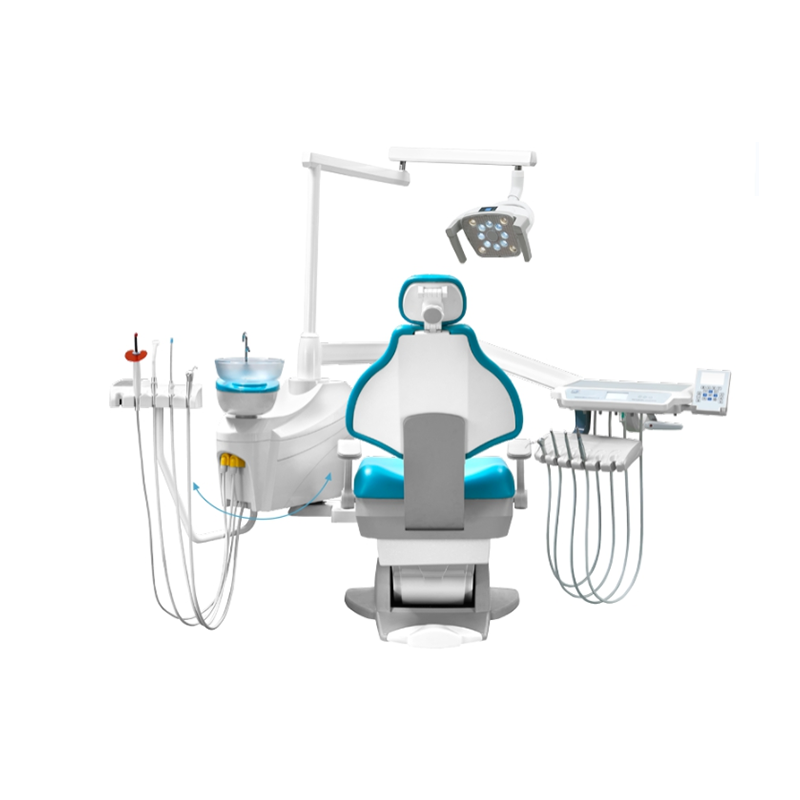
Modern engineering offers highly specific solutions to block these contamination pathways. Equipment manufacturers use advanced mechanical approaches to secure the fluid routing. We generally categorize these defense mechanisms into mechanical valves, isolated water sourcing, and automated clearing functions. Each category targets a specific stage of the contamination cycle to protect your patients.
Anti-retraction valves provide your most critical mechanical defense against suck-back. Think of a high-quality Dental Control Valve as a strict one-way street for fluids. The internal diaphragm opens wide to allow air and water out during operation. The precise moment you release the pedal, spring-loaded mechanisms snap the valve shut. This immediate physical closure blocks any reverse flow of oral fluids. Suck-back becomes physically impossible when you maintain these valves properly. They act as the absolute boundary between the patient's mouth and your clean water supply.
Independent water reservoirs offer another vital layer of proactive protection. Decades ago, older systems connected directly to municipal city plumbing. This outdated design gave clinicians zero control over the incoming water quality. Today, closed-bottle reservoir systems dominate modern dental clinics. They completely isolate your expensive equipment from unpredictable city water fluctuations. You can easily introduce distilled water into the bottles. More importantly, independent reservoirs allow you to add precise doses of daily chemical treatment agents right at the source.
Automated purge functions streamline your daily maintenance routines significantly. Built-in air and water routing facilitates highly standardized line flushing. In the past, assistants had to hold pedals down manually for long periods to clear lines. Modern delivery units feature automated purge buttons. The system automatically pushes high-pressure air and water through the entire network of tubes. This aggressive clearing removes stagnant fluids between patient visits. It ensures a baseline level of mechanical hygiene before you begin the next procedure.
Practice owners face tough choices when evaluating new equipment or planning retrofits. You must actively map physical engineering features to actual clinical outcomes. A structured evaluation framework prevents costly purchasing mistakes. It also ensures you invest in hardware capable of meeting strict modern safety standards.
First, you must demand rigorous compliance and validation data from your suppliers. Do not accept vague marketing promises regarding water safety. Ask vendors for verifiable documentation proving FDA medical device registration. The equipment must actively support current CDC and ADA waterline guidelines out of the box. These strict standards require routine dental water quality to remain below 500 CFU/mL. Your new hardware must demonstrably help you maintain this critical legal threshold.
Second, heavily assess valve durability and expected physical degradation. Mechanical components inevitably wear out over thousands of operating cycles. A check valve might operate perfectly during its first month. After ten thousand uses, internal rubber seals begin to degrade. These tiny components often fail silently without issuing any warning to the user. You will not notice the dangerous suck-back occurring during routine procedures. Therefore, ask manufacturers about the expected lifespan and cyclic fatigue testing of their control valves.
Third, evaluate ergonomics and workflow integration carefully. The safest controls are always the ones your staff actually use properly. Look closely at how the new components fit into your existing clinical workflow. You want to reduce friction for your dental assistants. Complicated systems often lead to skipped maintenance steps.
When evaluating a new setup, prioritize these specific operational checks:
Verify FDA registration for all internal waterline routing components.
Request engineering data on the cyclic fatigue testing of anti-retraction mechanisms.
Ensure the physical footprint of the reservoirs fits comfortably within your clinical space.
Confirm the internal tubing materials resist degradation from your preferred daily chemical shock treatments.
Check if technicians can easily access the control block for annual servicing without disassembling the entire chair.
Advanced hardware provides an excellent foundation for infection control. However, cutting-edge technology can never replace rigorous clinical discipline. You should approach any claims of a completely "maintenance-free" waterline system with heavy skepticism. Even the best mechanical engineering requires consistent human oversight to remain effective.
Staff adoption and continuous training define your true success rate. You must establish rigid Standard Operating Procedures for your entire team. Assistants must perform thorough daily flushing protocols every single morning. They must also flush the lines briskly between every patient visit. Furthermore, your team must execute periodic chemical shocking protocols diligently. These potent chemical shocks destroy the stubborn biofilm matrices attempting to form inside the tubes.
Continuous monitoring and regular water testing remain absolutely mandatory. You cannot simply assume your lines are clean because you installed new valves. Routine water testing serves as the only definitive way to verify safety. Regular testing proves your mechanical air controls, water routes, and chemical treatments actually function correctly together. It provides peace of mind and physical proof of your compliance.
Finally, you must understand the severe risks associated with silent hardware failures. False security is incredibly dangerous in a healthcare setting. Relying on a degraded anti-retraction valve without inspecting it puts vulnerable patients at extreme risk. If a valve fails and nobody tests the water, cross-contamination spreads rapidly across your patient base. Routine maintenance schedules actively prevent these catastrophic clinical blind spots.
Follow these standard protocols to maintain overall system integrity:
Purge all waterlines into a sink or designated receptacle for two full minutes at the start of each day.
Flush handpiece and syringe lines for 20 to 30 seconds between every patient to clear potential suck-back.
Apply a powerful chemical shock treatment weekly or monthly, strictly following the manufacturer instructions.
Conduct heterotrophic plate count (HPC) tests quarterly to log exact CFU levels and identify failing hardware early.
Procurement managers and practice owners eventually face a critical infrastructure decision. Should you retrofit old equipment with new valves or buy entirely new delivery units? A pragmatic decision matrix helps simplify this stressful evaluation process. Making the right choice requires assessing physical wear and operational efficiency.
Start by assessing the exact current age of your existing equipment. Dental chairs generally have a functional, reliable lifespan of ten to fifteen years. If your chair is relatively new, retrofitting makes excellent sense. You can swap out individual control blocks and valves quickly. However, older units pose a very different clinical challenge. The internal plastic tubing degrades, hardens, and cracks over time. Replacing a single valve on a fifteen-year-old chair rarely solves underlying biofilm problems. At this advanced age threshold, upgrading the entire delivery system becomes the safer, more logical choice.
Vendor transparency plays a massive role in your final purchasing decision. Do not hesitate to ask sales representatives tough technical questions. Require manufacturers to provide specific clinical data detailing their anti-retraction efficacy. Ask them how easily you can source original replacement parts five years down the line. A reputable vendor will gladly share maintenance schedules and failure rate data.
The chart below outlines key scenarios to guide your equipment purchasing decision.
Clinical Scenario | Recommended Action | Primary Clinical Benefit |
|---|---|---|
Equipment under 5 years old showing poor water test results. | Retrofit internal control blocks and replace existing tubing. | Restores mechanical anti-retraction barriers without replacing the entire chair chassis. |
Equipment over 10 years old with hardened, discolored tubing. | Full unit replacement. | Eliminates hidden biofilm reservoirs embedded deeply in degraded plastic pathways. |
Frequent, unexplained waterline test failures despite strict shocking. | Immediate inspection of the main anti-retraction valve. | Identifies silent mechanical failures causing continuous fluid retraction and contamination. |
Transitioning from municipal city water to closed systems. | Install independent water reservoir kits. | Grants total control over input water quality and daily chemical dosing accuracy. |
Effective air and water controls remain completely non-negotiable components of modern infection control. They serve as the vital bridge linking mechanical engineering directly to daily patient safety. You simply cannot rely on chemical water treatments alone to manage complex hygiene requirements. A robust, fully functioning physical barrier against fluid retraction is absolutely essential to stop cross-contamination at the source.
We strongly advise all clinics to take proactive diagnostic steps immediately. Conduct a thorough operational audit of your current equipment age and maintenance logs. Document the specific anti-retraction capabilities of your existing chairs. Review your most recent waterline test results to identify any hidden compliance gaps. Taking these decisive actions now ensures your practice maintains the highest possible standards of safety, compliance, and patient care.
A: Manufacturer guidelines dictate the exact lifespan of internal valves. Generally, certified technicians should inspect these critical components annually during routine preventive maintenance. Internal O-rings and rubber diaphragms wear out steadily with heavy daily use. Replacing them proactively before they fail prevents silent suck-back events. This routine swap maintains a highly secure physical barrier against cross-contamination.
A: No. Modern controls only prevent new cross-contamination by blocking immediate fluid retraction from the oral cavity. They cannot stop the natural, gradual formation of biofilm inside narrow-bore tubing. Even with the best anti-retraction valves installed, stagnant overnight water allows bacteria to multiply. You must continue regular chemical shock treatments to destroy existing biofilm matrices effectively.
A: The Centers for Disease Control and Prevention (CDC) and the EPA set clear, actionable guidelines for routine dental procedures. Water used in non-surgical procedures must strictly meet standard safe drinking water quality. This means the heterotrophic water bacteria levels must remain at or below 500 CFU/mL to ensure patient safety.


